Nichichū Line Weeping Cherry Blossom Avenue Complete Guide | Thorough Explanation of Kitakata City, Fukushima’s Cherry Blossom Spot
The “Nichichū Line Weeping Cherry Blossom Avenue” in Kitakata City, Fukushima Prefecture, is one of Japan’s largest weeping cherry blossom destinations, utilizing the former railbed of the abandoned Japanese National Railway Nichichū Line. The spectacular scenery of approximately 1,000 weeping cherry blossoms blooming across roughly 3 kilometers captivates many tourists each year. This article provides detailed information you should know before visiting, including the charm of Nichichū Line Weeping Cherry Blossom Avenue, peak viewing times, access methods, photography spots, and surrounding tourist attractions.
About Nichichū Line Weeping Cherry Blossom Avenue
History of Nichichū Line Memorial Bicycle and Pedestrian Path
Nichichū Line Weeping Cherry Blossom Avenue was established as a walking path utilizing part of the former railbed of the abandoned Japanese National Railway Nichichū Line, which ceased operations in Showa 59 (1984). This railroad line connecting Kitakata Station and Atasio Station was an important means of transportation for the region but eventually ended its role with the passage of time.
After the line’s closure, a greenway park was established in a 1,030-meter section starting from Kitakata Station in Showa 63 (1988), reborn as the “Nichichū Line Memorial Bicycle and Pedestrian Path.” Today, the walking path extends approximately 3 kilometers and is enjoyed as both a place of respite for citizens and a tourist attraction.
A Spectacular View Created by Approximately 1,000 Weeping Cherry Blossoms
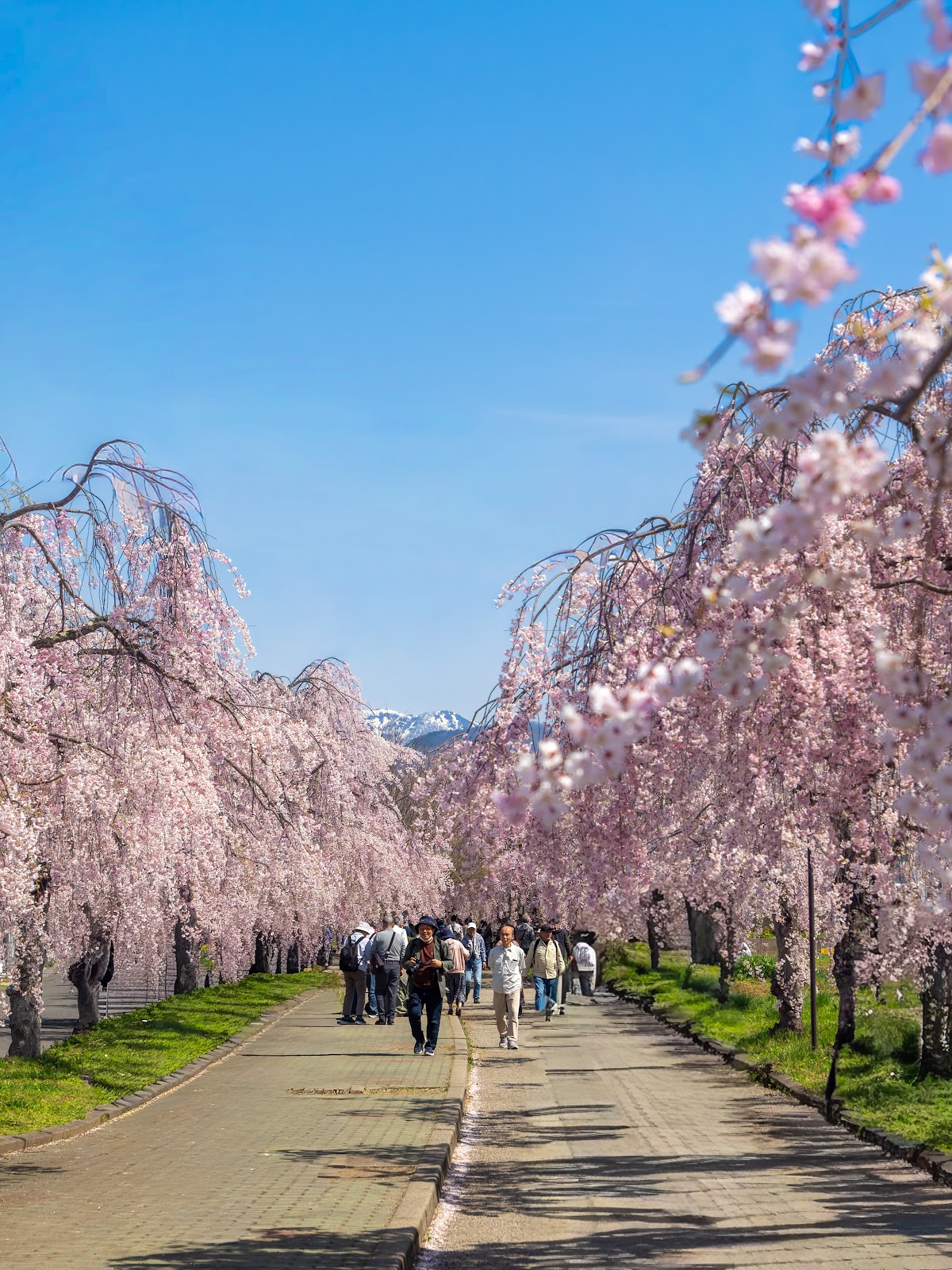
The greatest characteristic of Nichichū Line Weeping Cherry Blossom Avenue is its enormous scale. The approximately 1,000 weeping cherry blossoms planted on both sides of the walking path are primarily composed of double-flowered crimson weeping cherries and crimson weeping cherries, forming a cherry blossom tunnel at full bloom. Weeping cherry blossom avenues of this scale are said to be among Japan’s largest, boasting a grandeur unparalleled elsewhere in Fukushima Prefecture.
The walking path extends north to south, and visitors can enjoy a leisurely stroll from the entrance located about a 5-minute walk west of Kitakata Station. The cherry tree branches drape over the pathway, creating a fantastical experience as if walking through a pink curtain.
Steam Locomotive Exhibition and Photo Spots
Near the midpoint of the walking path, a steam locomotive (SL) that once ran the Nichichū Line is on display, serving as a popular photography spot. The contrast between the black body of the SL and the fully bloomed weeping cherries makes for an excellent photography subject, attracting many photographers and tourists.
The area around the SL plaza is particularly beautiful with the cherry blossom tunnel, and on clear days, blue skies, pink cherry blossoms, and the historic SL all fit into one photograph—truly a spectacular spot. Early morning hours are relatively less crowded, allowing for leisurely photography.
Peak Viewing Time and Bloom Status
Typical Bloom and Full Bloom Periods
Cherry blossoms at Nichichū Line Weeping Cherry Blossom Avenue typically reach peak viewing from mid to late April. These blossoms tend to bloom slightly later than Somei Yoshino and can be enjoyed at a later time than other cherry blossom destinations in Fukushima Prefecture.
The specific bloom schedule is as follows:
- Bloom Period: Around mid-April
- Full Bloom Period: Mid to late April
- Peak Viewing Period: Approximately one week from full bloom
However, the bloom timing varies depending on the year’s weather conditions, so it is recommended to check the latest bloom status before your visit.
How to Check Bloom Status
When planning your visit, you can check the latest bloom status using the following methods:
- Kitakata City Official Website: The Commerce and Tourism Division page publishes a bloom status calendar
- Weather News: Cherry blossom bloom information allows you to check the status of Nichichū Line Weeping Cherry Blossom Avenue
- Japan Meteorological Corporation tenki.jp: Detailed bloom forecasts and full bloom predictions are posted
- Social Media: Check the latest photographs on Instagram and Twitter using hashtags such as “#日中線しだれ桜”
Current bloom status changes daily, so it is recommended to check again 2-3 days before your visit.
Kitakata Cherry Blossom Festival
The “Kitakata Cherry Blossom Festival” is held during the peak cherry blossom season. Various events are planned during the period, and food stalls serving local cuisine and sales of specialty products are also held, allowing visitors to appreciate the cherry blossoms while enjoying Kitakata’s appeal.
The festival period attracts considerable crowds, so early morning visits or weekday use are recommended. Weekends and holidays are particularly crowded, so plan with ample time.
Access Information
Access by Train
Nichichū Line Weeping Cherry Blossom Avenue is conveniently located within walking distance of JR Kitakata Station.
From JR Kitakata Station:
- Approximately 5-minute walk to the walking path entrance
- Head west from the station and the entrance becomes visible
- From the Tokyo area, take the Tohoku Shinkansen to Koriyama Station, then transfer to the Banetsu West Line to Kitakata Station (approximately 2 hours 30 minutes travel time)
Train access has the advantage of no traffic congestion concerns and smooth access even during peak cherry blossom season.
Access by Car
Routes by private vehicle are as follows:
From Banetsu Expressway:
- Approximately 20 minutes from Aizuwakamatsu IC via National Route 121
- From the Niigata area, approximately 40 minutes from Nishi-Aizu IC via National Routes 459 and 121
From Tohoku Expressway:
- From Koriyama JCT to Banetsu Expressway to Aizuwakamatsu IC takes approximately 40 minutes, then approximately 20 more minutes
Parking Information
Temporary parking lots are established in surrounding areas during peak cherry blossom season.
Main Parking Lots:
- Kitakata City Hall Parking Lot (approximately 10-minute walk)
- Oshikiri River Park Parking Lot (close to walking path entrance)
- Other public facility parking lots nearby
- Private parking (paid)
Parking Lot Usage Notes:
- Weekends and holidays during peak season are very crowded
- Early morning hours are relatively available
- Street parking is strictly prohibited
- Temporary parking lot locations can be confirmed on Kitakata City’s official website
Traffic control is conducted during the period, but congestion is expected, so consider using public transportation.
Photography Spots and Recommended Ways to Enjoy
Excellent Photography Spots
Nichichū Line Weeping Cherry Blossom Avenue has several photography spots popular with photography enthusiasts.
1. SL Plaza Area
- Collaboration of the displayed SL and weeping cherries
- Early morning light hours (around 7:00-9:00 AM) are recommended
- Silhouette photography utilizing backlighting is also popular
2. Cherry Blossom Tunnel Section
- A tunnel created by cherry blossoms blooming overhead
- Incorporate people into compositions to express depth
- On cloudy days, soft light makes cherry blossom colors photograph beautifully
3. Straight Section of Walking Path
- Capture the cherry avenue continuing 3 kilometers using perspective
- Side-lit in early morning and evening creates dramatic effects
Photography Tips:
- Early morning (6:00-8:00 AM) is recommended when fewer people are present
- On overcast days, cherry blossom colors photograph vividly
- Use wide-angle lenses to capture the overall atmosphere and telephoto lenses for details
- Fallen petals on the ground are also beautiful subjects
How to Enjoy the Stroll
Required Time:
- Walking the 3-kilometer one-way roundtrip takes approximately 2-3 hours
- Allow 3-4 hours for photography and leisurely appreciation
- You may turn back midway
Points for Strolling:
- The walking path is exclusively for bicycles and pedestrians with no vehicle traffic, ensuring safety
- The flat terrain is comfortable even for elderly visitors and families with small children
- Benches are placed throughout, allowing rest while enjoying the view
- Pet walking is permitted, but follow proper etiquette
Restroom and Rest Facilities
Temporary restrooms are installed along the walking path during peak cherry blossom season. However, lines may form during crowded times, so it’s recommended to use facilities around Kitakata Station beforehand.
Vending machines are available near the walking path entrance, but numbers are limited, so it’s wise to prepare drinks in advance.
Surrounding Tourist Attractions
Kitakata Ramen
Kitakata City is nationally famous as the birthplace of “Kitakata Ramen.” When visiting Nichichū Line Weeping Cherry Blossom Avenue, be sure to enjoy authentic Kitakata Ramen.
Characteristics:
- Flat wavy noodles with mild soy-based broth
- Over 100 ramen restaurants throughout the city
- Morning ramen culture exists, with some shops opening from 7 AM
Many popular ramen shops surround Kitakata Station, making them convenient to visit before or after cherry blossom viewing.
Strolling Through the Storehouse District
Kitakata City is also known as a “storehouse town” with approximately 4,000 remaining storehouses throughout the city.
Points of Interest:
- Historic buildings with brick and earthen plaster construction
- Cafes and galleries converted from storehouses
- Sake brewery tours (some facilities offer tastings)
- Miso and soy sauce makers
You can explore the storehouse district on your way back to Kitakata Station from Nichichū Line Weeping Cherry Blossom Avenue. Allow 1-2 hours.
Tourist Attractions in Aizuwakamatsu City
About 20 minutes by car from Kitakata City, Aizuwakamatsu City has many historical tourist sites.
Major Tourist Attractions:
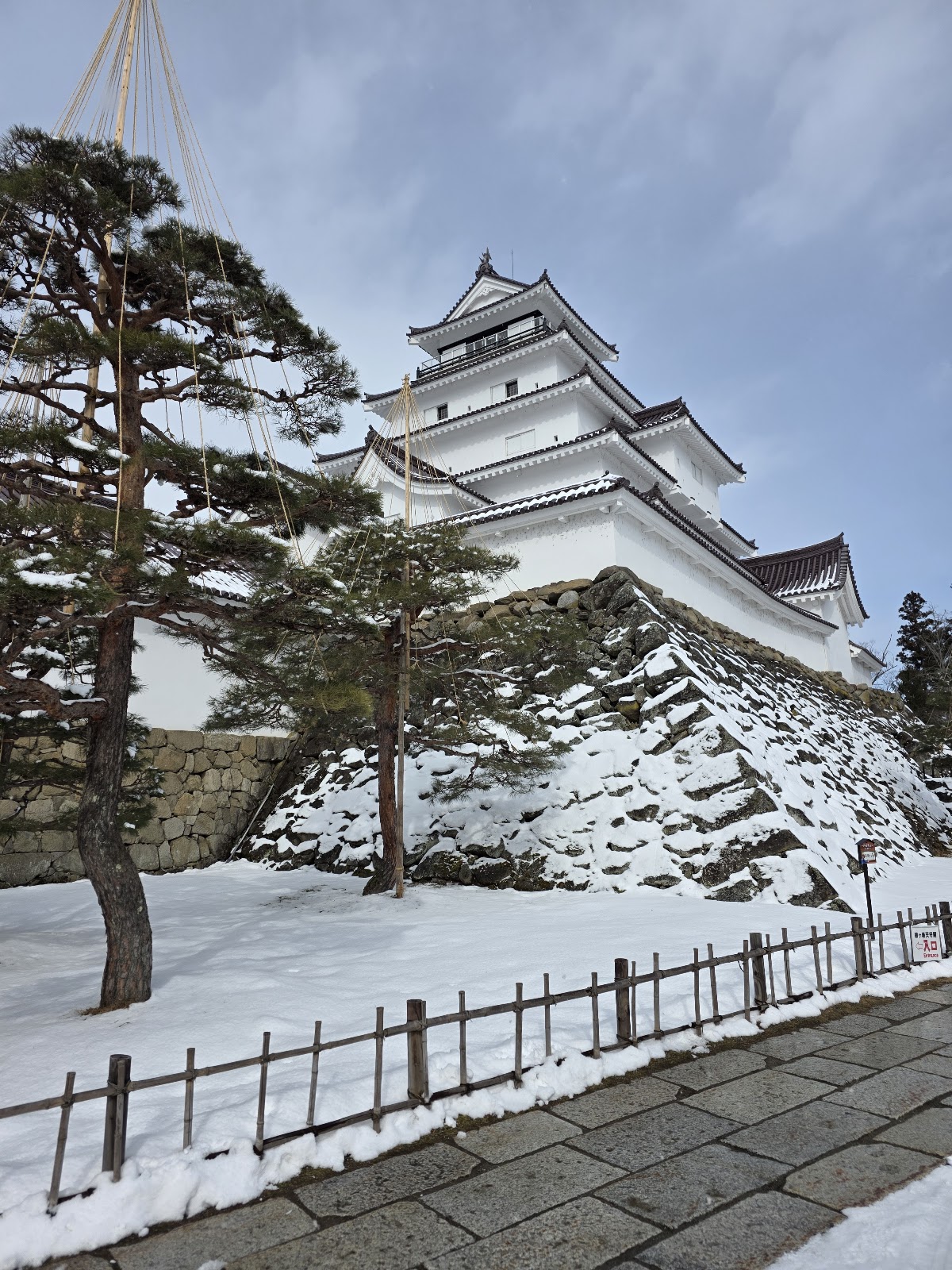
- Tsurugajo Castle: Symbol of Aizuwakamatsu and also a cherry blossom destination
- Iimorizan: Historically significant site related to the Byakkotai
- Nanoka-Machi Street: Retro streetscape and shopping
- Higashiyama Hot Spring: Day-trip bathing also available
A 1-2 night plan combining Nichichū Line Weeping Cherry Blossom Avenue and Aizu region tourism is also recommended.
Nearby Cherry Blossom Destinations
Other beautiful cherry blossom spots exist in Fukushima’s Aizu region.
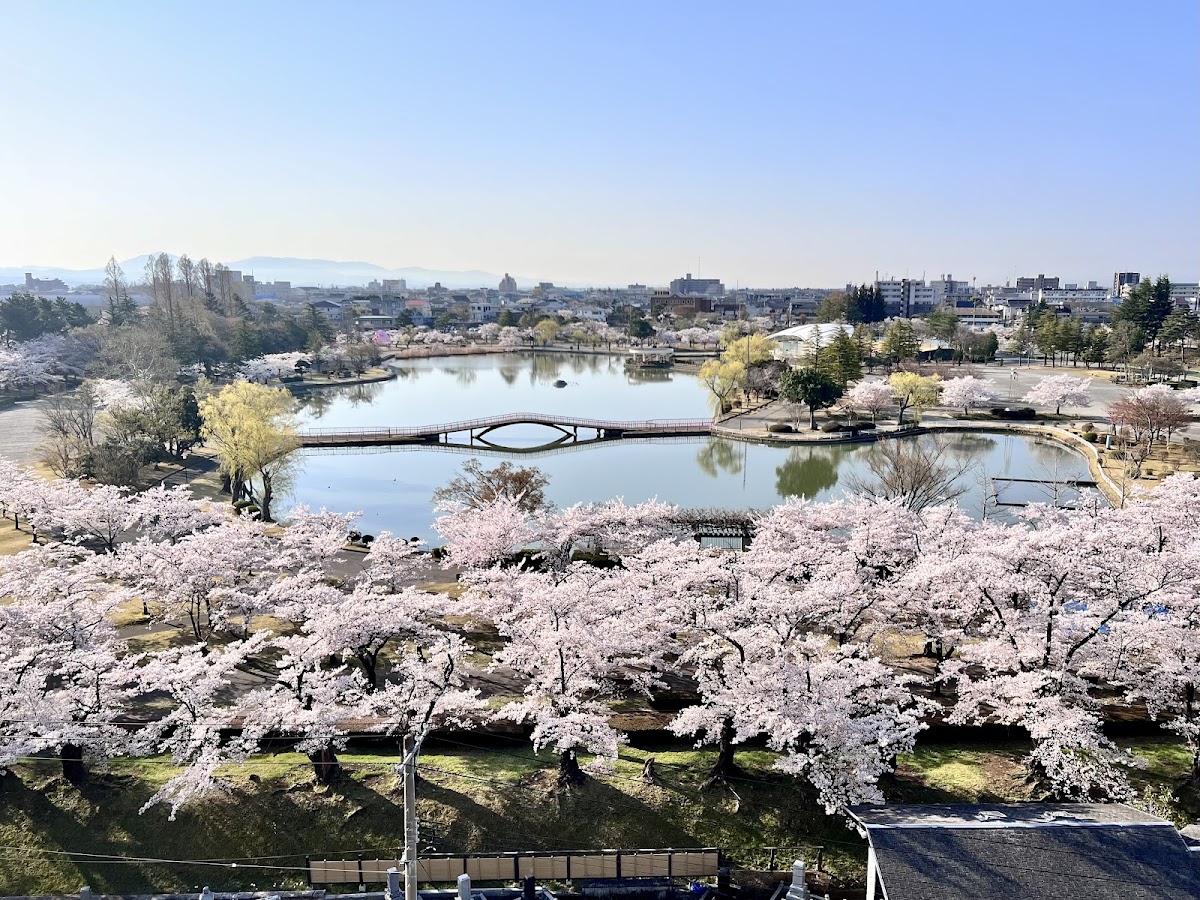
- Tsurugajo Park: Approximately 1,000 cherry blossoms with castle collaboration
- Ishibe Cherry: A single ancient cherry tree approximately 650 years old
- Kannon-ji River Cherry Avenue: Cherry avenue along the river
- Shintsu Castle Site Cherry: Hidden gem cherry blossom spot
The “Aizu Cherry Blossom Touring” visiting these spots is also popular.
Precautions and Etiquette During Visits
Congestion Countermeasures
Nichichū Line Weeping Cherry Blossom Avenue becomes very crowded with many tourists during peak season.
Congestion Avoidance Points:
- Early morning visits (6:00-8:00 AM) are recommended
- Weekdays are relatively less crowded than weekends and holidays
- Slightly outside peak bloom times are also beautiful
- Congestion eases after initial bloom or as blossoms begin to fall
Manners and Rules
To preserve the beautiful cherry avenue and ensure all visitors can enjoy comfortably, please follow these guidelines.
Basic Etiquette:
- Do not break cherry branches or damage trees
- Take all trash with you (trash bin placement is limited)
- Stay on the walking path
- Show consideration for other visitors (do not speak loudly, do not occupy spots for extended periods)
- When using tripods, be careful not to obstruct traffic
- Drone use may be prohibited; check in advance
Photography Etiquette:
- Avoid monopolizing popular spots for long periods
- Be considerate when others are photographing
- Do not enter restricted areas
Recommended Clothing and Items
Recommended Clothing:
- Comfortable walking shoes (prepare for approximately 3-kilometer stroll)
- A layer to wear (temperature varies greatly mid to late April)
- A hat and sunscreen on sunny days
- Umbrella or raincoat for rainy weather
Convenient Items to Bring:
- Camera/smartphone (do not forget to charge)
- Drinks (vending machines are limited)
- Picnic sheet (for resting)
- Trash bag (take trash with you)
- Wet wipes
Nichichū Line Weeping Cherry Project
Cherry Avenue Preservation Activities
The NPO “Nichichū Line Weeping Cherry Project” conducts various preservation activities to preserve this beautiful cherry avenue for the future.
Main Activities:
- Planting and management of weeping cherries
- Walking path extension project (aiming to extend from current 3 km to 8.6 km)
- Health management of cherry trees and pest control
- Cleanup activities and environmental improvements
Participating in Support Projects
Through corporate sponsorship projects such as “KIRIN Hareyake ACTION,” you can support Nichichū Line Weeping Cherry Blossom Avenue. You can also contribute to preserving this beautiful landscape through on-site cleanup volunteering or donations.
For details, check the NPO Nichichū Line Weeping Cherry Project’s official website.
Accommodation Information
Accommodations in Kitakata City
For a leisurely enjoyment of Nichichū Line Weeping Cherry Blossom Avenue, staying in Kitakata City is recommended.
Types of Accommodations:
- Business hotels (around Kitakata Station)
- Inns and private lodgings (enjoy cuisine with local ingredients)
- Guest houses (reasonable prices)
During peak cherry blossom season, reservations fill quickly, so booking 2-3 months in advance is recommended.
Accommodations at Nearby Hot Spring Resorts
The Aizu region has many hot spring destinations, and plans combining hot springs and cherry blossoms are popular.
Nearby Hot Spring Destinations:
- Atasio Hot Spring: In Kitakata City, approximately 20 minutes by car
- Higashiyama Hot Spring: In Aizuwakamatsu City, approximately 30 minutes by car
- Ashinomaki Hot Spring: In Aizuwakamatsu City, approximately 40 minutes by car
Plans to stay at these hot spring destinations and visit Nichichū Line Weeping Cherry Blossom Avenue as a day trip are also recommended.
Conclusion
Nichichū Line Weeping Cherry Blossom Avenue is a premier cherry blossom destination representing Fukushima Prefecture, with its historical background as an abandoned railroad and the grand landscape created by approximately 1,000 weeping cherry blossoms. The cherry blossom tunnel stretching about 3 kilometers and its collaboration with the SL provide unforgettable memories for all who visit.
Peak viewing is typically mid to late April, and its convenient location within a 5-minute walk from Kitakata Station is also appealing. When visiting, check the latest bloom status and consider early morning visits or weekday use to avoid congestion.
Combined with Kitakata Ramen, the storehouse district, and surrounding tourist attractions, you can fully enjoy the charm of the Aizu region. By following proper etiquette to preserve the beautiful cherry avenue, we can maintain this wonderful landscape for future generations.
When traveling to Fukushima in spring, be sure to visit Nichichū Line Weeping Cherry Blossom Avenue and experience the spectacular view of Japan’s largest weeping cherry blossoms.