Akizuki Sugi no Baba Sakura | Complete Guide to Enjoying the Cherry Blossom Tunnel at One of Fukuoka Prefecture’s Premier Destinations
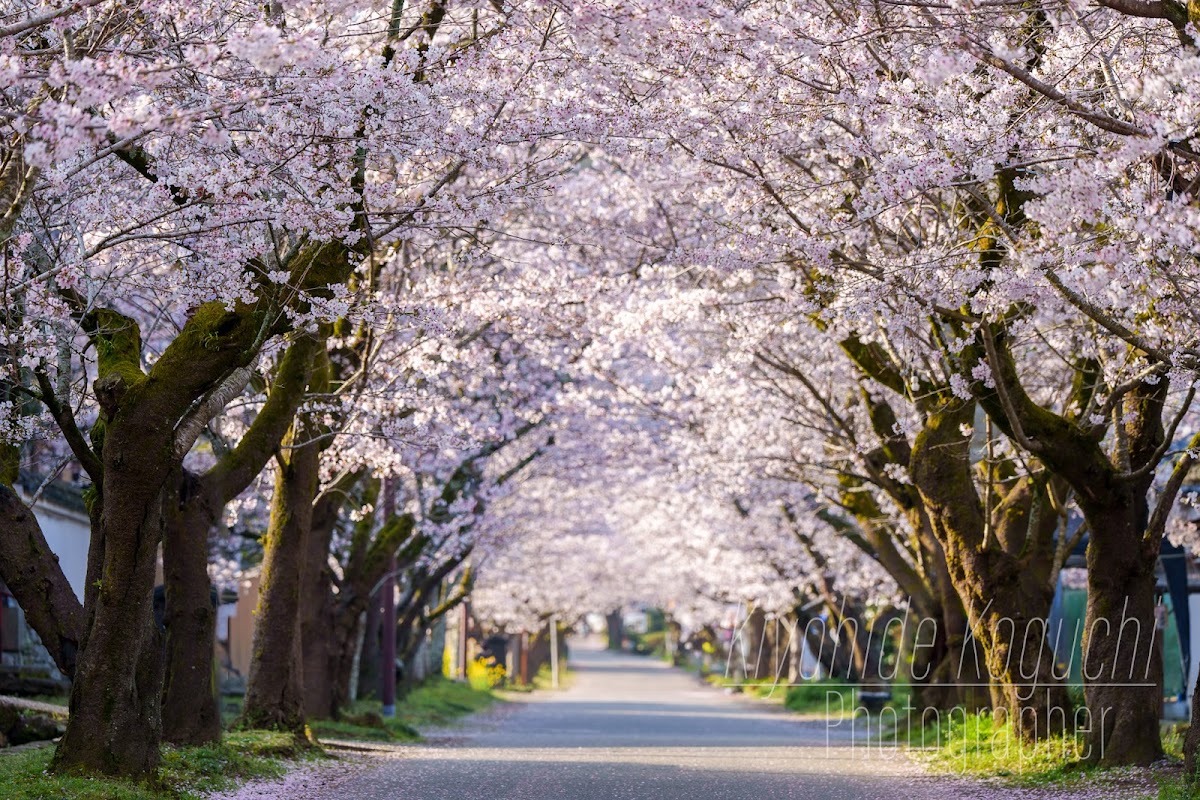
Akizuki in Asakura City, Fukuoka Prefecture is known as the “Little Kyoto of Chikuzen,” a castle town. Among its attractions, the cherry blossoms at Akizuki Sugi no Baba rank among Fukuoka Prefecture’s finest cherry blossom viewing spots, captivating countless flower-viewing enthusiasts each year. The cherry blossom tunnel stretching for approximately 500 meters creates a fantastical landscape as if one has wandered into another world.
This article comprehensively introduces information you should know before visiting, from the history and best viewing times of Akizuki Sugi no Baba’s cherry blossoms to access methods, surrounding tourist attractions, and recommended ways to enjoy them.
What is Akizuki Sugi no Baba? Understanding Its History and Origins
The History of the Baba Dating Back to the Edo Period
Akizuki Sugi no Baba was originally used as a horse training ground for the Akizuki Domain during the Edo period. The Akizuki Domain, as a branch domain of the Fukuoka Domain, was established in 1624 by Kuroda Naooki, the third son of Kuroda Nagamasa. This road, which also served as the approach to Akizuki Castle, was lined with many large cryptomeria trees at the time, earning it the name “Sugi no Baba” (Cryptomeria Field).
The approximately 500-meter straight path, developed linearly, served as an important location suitable for equestrian training. As a symbol of the castle town Akizuki’s samurai culture, it has long been cherished by local residents.
Replanting with Cherry Trees as a Russo-Japanese War Victory Memorial
The cherry blossom rows visible today were replanted as a memorial to victory in the Russo-Japanese War (1904-1905). In the late Meiji era, this road transformed from a cryptomeria grove to a cherry blossom avenue, being reborn as a new symbol for the region.
The Somei Yoshino cherry trees planted at that time have grown into large trees over more than 100 years, and now approximately 200 cherry trees line both sides, creating a spectacular landscape. This cherry blossom row with historical significance is not merely a tourist destination but a place filled with regional memories and pride.
The Charm of Akizuki, the “Little Kyoto of Chikuzen”
Akizuki retains the historical streetscape of a castle town and is called the “Little Kyoto of Chikuzen.” In a natural environment surrounded by clear streams and mountains, the landscape harmonizes samurai residences, stone walls, and old street layouts, transporting visitors back to the Edo period.
Many historical structures remain, including Akizuki Castle ruins, the Black Gate, and long houses. One can enjoy the beauty of different seasons even outside the cherry blossom season. The autumn foliage season is particularly popular, making it a representative tourist destination in Fukuoka Prefecture visited throughout the year.
The Spectacular Cherry Blossom Tunnel | Highlights of Akizuki Sugi no Baba
The Cherry Blossom Tunnel Spanning Approximately 500 Meters
The greatest attraction of Akizuki Sugi no Baba is undoubtedly the cherry blossom tunnel extending for approximately 500 meters. Approximately 200 Somei Yoshino cherry trees line both sides of the straight road, blooming overhead in full bloom.
Walking through the cherry blossom tunnel, pale pink flowers cover the sky, and sunlight passes through the cherry blossoms, casting soft light. This fantastical scenery is extremely popular as a photogenic spot, attracting many photographers and tourists.
Especially on sunny mornings, the morning sun illuminates the cherry blossoms, allowing you to enjoy more vivid colors. When the wind blows, cherry blossoms scatter, and a carpet of petals spreads across the ground.
The Contrast Between Castle Town Scenery and Cherry Blossoms
The charm of Akizuki Sugi no Baba is not limited to the cherry blossom row alone. The contrast between the historical structures unique to a castle town, stone walls, and old streets with the cherry blossoms creates a unique atmosphere not found at other cherry blossom spots.
At the end of the cherry blossom tunnel stands Akizuki Castle ruins, with the Black Gate and long houses performing in harmony with the cherry blossoms. The scenery of white walls and stone walls of samurai residences harmonizing with pale pink cherry blossoms evokes the refined atmosphere worthy of the name “Little Kyoto.”
In the surrounding area, there are cafes and souvenir shops converted from old houses, allowing visitors to experience the region’s culture and history while strolling. It is truly a cherry blossom destination unique to Fukuoka Prefecture, where great nature and historical scenery merge.
Characteristics and Beauty of Somei Yoshino
The cherry trees planted at Akizuki Sugi no Baba are Somei Yoshino, the most common cherry variety in Japan. Somei Yoshino is a horticultural variety developed through selective breeding in the late Edo period, characterized by a short blooming period and simultaneous abundant flowering.
The Somei Yoshino at Akizuki Sugi no Baba includes many large trees over 100 years old, with impressive trunk thickness and branch forms. At full bloom, thousands of flowers bloom on a single tree, and with 200 trees lined up, they create a scenery like a sea of cherry blossoms.
The pale pink petals number five, with distinctive stamens in the center. Shortly after opening, the color is nearly white, but as it approaches full bloom, the pink deepens, and at the end of blooming, it displays an even deeper hue. This color change is one of Somei Yoshino’s charms.
Peak Viewing Times and Bloom Status | When Should You Visit?
The Typical Peak Season is Late March to Early April
The peak viewing time for cherry blossoms at Akizuki Sugi no Baba is typically from late March to early April. This is a relatively standard bloom time within Fukuoka Prefecture, allowing you to enjoy the blossoms at nearly the same timing as cherry blossoms in Fukuoka City.
The period from blooming to full bloom is approximately one week, with the full bloom state lasting 3 to 5 days. After that, you can continue to enjoy cherry blossom scattering and carpets of petals, with the total peak viewing period being approximately two weeks.
Due to temperature fluctuations year to year, bloom times may vary. When planning a visit, it is recommended to check official information from Asakura Tourism Association and bloom forecasts.
Methods to Confirm Bloom Status
The bloom status of cherry blossoms at Akizuki Sugi no Baba can be confirmed through multiple methods.
The official website of Asakura Tourism Association updates bloom status regularly during the season. Information is provided in stages such as “buds,” “blooming begins,” “half bloom,” “full bloom,” “scattering begins,” and “peak season ends,” serving as a useful reference for planning visits.
The official Asakura City website also posts bloom status as tourism information. Since it is managed by the city’s Commerce and Tourism Division, reliability is high.
Weather forecast sites such as Weather News and Japan Meteorological Corporation tenki.jp also post information about Akizuki Sugi no Baba’s status as part of nationwide cherry blossom opening information. These sites also provide estimated bloom dates and peak bloom dates, proving helpful for advance planning.
Searching hashtags like “#AkizukiSugiNoBaba” and “#AkizukiSakura” on social media reveals real-time posts from visitors, allowing you to grasp the latest situation.
The Appeal of Both Full Bloom and Scattering
During full bloom, approximately 200 cherry trees bloom at once, creating the most splendid and overwhelming scenery. The cherry blossom tunnel becomes complete, and it is ideal for photography. Although many tourists visit, causing congestion, the spectacular sight is well worth it.
On the other hand, the cherry blossom scattering and carpet of fallen petals offer a beauty not to be missed. With each breeze, scattering blossoms create a fantastical scene as if snow is falling. The experience of walking on a pink carpet of petals spread across the road offers a different charm from full bloom.
During the scattering period, there are fewer visitors than at full bloom, making it recommended for those who wish to enjoy a leisurely walk. For those who want to appreciate cherry blossoms quietly, deliberately visiting during scattering is an option.
Akizuki Spring Festival | Enjoying Cherry Blossoms and Traditional Arts
Typically Held on the First Sunday of April
Coinciding with the peak viewing time of cherry blossoms at Akizuki Sugi no Baba, the “Akizuki Spring Festival” is typically held on the first Sunday in April. This festival provides a valuable opportunity to enjoy both cherry blossom viewing and local traditional culture, attracting many tourists.
During the spring festival period, even more people visit than usual, so congestion at parking lots and surrounding roads is expected. Use of public transportation is recommended, though experiencing the lively atmosphere and events unique to the festival is an excellent opportunity.
The Powerful Performance of Komitsu-ryu Taiko
One highlight of the Akizuki Spring Festival is the performance of Komitsu-ryu taiko. Komitsu-ryu taiko is a traditional Japanese taiko drum handed down in the Akizuki region, characterized by powerful rhythm and impressive sound.
The sound of taiko drums echoing against the backdrop of the cherry blossom tunnel allows visitors to feel the arrival of spring through both sight and sound. The skilled technique and well-coordinated performance of the performers captivate audiences, with the venue filling with hearty applause.
The opportunity to view local traditional arts up close is valuable. You can experience a uniquely Akizuki experience where cherry blossom beauty and traditional culture merge.
Exhibition of Hayashi-ryu Kakae Otetsutsu
Another highlight is the presentation of Hayashi-ryu kakae otetsutsu, a type of matchlock gun handed down from the Edo period, which is a valuable cultural property transmitting the samurai culture of Akizuki Domain to the present.
The kakae otetsutsu is larger than ordinary matchlock guns, and the roar and smoke upon firing are extremely impressive. In the exhibition, performers dressed in period costume conduct the firing ceremony according to traditional procedures.
This exhibition of historical weapons rarely seen in the modern era provides a valuable experience to feel the history of the castle town Akizuki. The exhibition is conducted with careful attention to safety and can be enjoyed by both adults and children.
Other Events and Vendor Stalls
Beyond the taiko and otetsutsu exhibitions, the Akizuki Spring Festival offers various events and vendor stalls. There are stalls selling local specialty products and food stalls offering Akizuki specialty items like kudzu dumplings and yuzu pepper, allowing visitors to enjoy food while exploring.
Performances of local folk arts by community children and stage events are also held, with the entire region enveloped in festival atmosphere. Beyond cherry blossom viewing, you can deepen your understanding of Akizuki’s charm through experiencing local culture and interactions with local people.
Access Methods | By Car and Public Transportation
Car Access and Parking Information
When visiting Akizuki Sugi no Baba by car, Amagi Interchange on the Oita Expressway is the nearest IC. From Amagi IC, it takes approximately 20 minutes to arrive.
Travel times from major cities:
- From Fukuoka City: approximately 1 hour
- From Kitakyushu City: approximately 1.5 hours
- From Kurume City: approximately 40 minutes
- From Oita City: approximately 1.5 hours
Temporary parking lots are set up during the cherry blossom season. Multiple parking areas, including Akizuki Parking Lot, are provided, with general car parking fees of approximately 400 to 500 yen per day.
However, parking lots often reach capacity during peak viewing times, weekends, and especially on the Akizuki Spring Festival day, with surrounding roads experiencing traffic congestion. Congestion can be avoided by arriving early (before 8 AM) or visiting on weekdays.
Public Transportation Access
Using public transportation, the following routes are convenient.
Using JR and Amagi Railway:
- Get off at “Kiyama Station” on the JR Kagoshima Main Line
- Transfer to Amagi Railway (approximately 28 minutes)
- Get off at “Amagi Station” on Amagi Railway
- Board Amagi Sightseeing Bus (approximately 20 minutes)
- Get off at “Museum Front” bus stop, very close on foot
Using Nishi-Tetsu Electric Railway and Bus:
- Get off at “Amagi Station” on the Nishi-Tetsu Tenjin Omuta Line
- Board Amagi Sightseeing Bus (approximately 20 minutes)
- Get off at “Museum Front” bus stop, very close on foot
During the cherry blossom season, extra buses from Amagi Station toward Akizuki may be added. It is recommended to check the latest traffic information on the Asakura Tourism Association’s official website.
By using public transportation, you can enjoy the cherry blossoms leisurely without worrying about traffic congestion or parking.
Congestion Timing and Avoidance Methods
As a popular cherry blossom spot, Akizuki Sugi no Baba experiences congestion during peak season. The following times and dates are particularly crowded.
Congestion peaks:
- Saturdays, Sundays, and holidays from 10 AM to 3 PM
- Akizuki Spring Festival date
- The first weekend after full bloom announcement
Congestion avoidance tips:
- Visit on weekdays
- Visit early morning (7-9 AM) or evening (4 PM onward)
- Aim for times just before or after full bloom (80% bloom or scattering begins)
- Use public transportation
Early morning offers fewer people and the chance to enjoy cherry blossoms quietly, plus the cherry blossoms illuminated by morning sun are exceptionally beautiful. It is truly an optimal time for photography.
Ways to Enjoy Akizuki Sugi no Baba’s Cherry Blossoms
Best Photography Spots
Akizuki Sugi no Baba has numerous photogenic locations.
The center point of the cherry blossom tunnel is where both sides of cherry blossoms intersect overhead, creating the strongest “tunnel feeling.” Standing in the center of the road and photographing with depth-of-field composition effectively expresses the grandeur of the cherry blossom tunnel.
The combination of Akizuki Castle ruins’ Black Gate with cherry blossoms is also a popular photography spot. The contrast between historical structures and cherry blossoms creates a photo evoking the unique charm of Akizuki.
The carpet of petals during scattering season is also not to be overlooked. Photographing fallen pink petals on the ground together with cherry blossoms still on branches expresses spring’s transience and beauty.
When photographing, be mindful not to disturb other tourists, and if using a tripod, avoid crowded times to observe proper etiquette.
Enjoying a Leisurely Stroll Route
To fully enjoy the cherry blossoms at Akizuki Sugi no Baba, a walking tour including surrounding historical sites is recommended.
Recommended walking route (approximately 2-3 hours):
- Start from Akizuki parking lot or Museum Front bus stop
- Walk slowly through Sugi no Baba cherry blossom tunnel (approximately 15 minutes)
- Visit Akizuki Castle ruins and Black Gate (approximately 20 minutes)
- Stroll around the long house area (approximately 15 minutes)
- Walk through the castle town’s old streets (approximately 30 minutes)
- Rest at a café or souvenir shop (approximately 30 minutes)
- Visit Akizuki Local History Museum or Akizuki Museum (approximately 40 minutes)
This route allows you to deeply understand not just the cherry blossoms but also Akizuki’s history and culture. The cherry blossom season especially offers pleasant weather, making it ideal for leisurely walking.
Local Cuisine and Souvenirs
When visiting Akizuki, be sure to enjoy local cuisine.
Akizuki’s specialty kudzu dumplings are characterized by their transparent appearance and smooth texture. They can be purchased at long-established shops like “Hirokyu Kuzu Honpo.”
Yuzu pepper is also an Akizuki specialty product. Made with yuzu grown locally and red peppers, authentic yuzu pepper makes an excellent souvenir.
Old house cafes are scattered throughout, allowing you to slowly enjoy tea while viewing cherry blossoms. Many shops offer lunch and sweets using local ingredients, making them perfect for breaks during exploration.
For souvenirs, items with motifs from Akizuki’s history or processed products using local agricultural products are recommended.
Nearby Tourist Attractions
Akizuki Castle Ruins and Historical Structures
Akizuki Castle ruins, where the Akizuki Domain’s castle once stood, now preserves stone walls, moats, and the Black Gate. The Black Gate, the main gate of Akizuki Castle, with its substantial construction, evokes the dignity of the era.
The long house is a samurai residence gate of an Akizuki Domain retainer, transmitting the atmosphere of samurai residences to the present day. It is known as a cherry blossom spot in spring and autumn foliage spot in autumn, allowing enjoyment of seasonal beauty.
The Akizuki Local History Museum displays materials related to Akizuki’s history and culture, allowing deeper understanding of the castle town’s history.
Koishihara Pottery Traditional Industry Hall
Approximately 30 minutes by car from Akizuki, the Koishihara Pottery Traditional Industry Hall allows learning about the history and manufacturing process of Koishihara pottery, a Fukuoka Prefecture traditional craft.
Koishihara pottery is characterized by distinctive flying plane shaving and brush marking techniques, with works ranging from everyday items to artistic pieces. Works can actually be purchased in the hall, and it can be used as a starting point for visiting kilns.
Pottery experience programs are also available, allowing creation of original works. Combined with cherry blossom viewing, experiencing traditional crafts is also recommended.
Kyosei no Sato Kurokawa INN and Surrounding Nature
Approximately 40 minutes by car from Akizuki, Kyosei no Sato Kurokawa INN is a lodging facility known for beautiful starry skies. The surrounding area is rich in nature, offering hiking and nature observation opportunities.
The Kurokawa district has minimal light pollution, allowing observation of a starry sky at night. Visiting during the spring cherry blossom season offers the luxury of experiencing both daytime cherry blossoms and nighttime starry skies, a wonderful natural experience.
Takebe District Rice Terraces
The Takebe district of Asakura City has beautiful rice terraces selected as one of Japan’s 100 best terraces. Located approximately 20 minutes by car from Akizuki, the step-like paddies spread across the mountain slope evoke Japan’s original landscape.
In spring, rice planting preparations begin, and the water-filled paddies mirror the sky. Though timing is slightly different from cherry blossom season, it provides a way to feel the richness of nature surrounding Akizuki.
Precautions and Etiquette During Visits
Cooperation in Cherry Blossom Protection
The cherry blossoms at Akizuki Sugi no Baba are precious natural heritage with over 100 years of history. Refrain from breaking branches or damaging trunks.
Avoid stepping on the roots of cherry trees. Damaged roots negatively affect tree health. When approaching cherry blossoms for photography, move while avoiding the root areas.
Be sure to take all trash with you when flower viewing. Each person’s manners are essential to preserving the beautiful scenery.
Consideration During Crowding
During peak season with many visitors, a spirit of mutual consideration is important. Avoid monopolizing the same location for extended photo sessions, offering other tourists opportunities to photograph.
Standing in the middle of the road impedes passage. When stopping to photograph, please move to the roadside.
Consideration for Local Residents
Akizuki is both a tourist destination and a place where local people live. Unauthorized entry into residential areas and photography on private property are strictly prohibited.
When visiting early morning or evening, refrain from loud conversation or forcefully closing car doors, being considerate of noise concerns.
The ability to enjoy beautiful cherry blossoms depends on local residents’ understanding and cooperation. Visit with gratitude.
Conclusion | Experiencing a Special Spring at Akizuki Sugi no Baba
Akizuki Sugi no Baba’s cherry blossoms, as a representative cherry blossom destination in Fukuoka Prefecture, are a special place where history, nature, and culture merge. The approximately 500-meter cherry blossom tunnel creates an overwhelming landscape never to be forgotten once seen.
History continuing from the Edo period, origins as a Russo-Japanese War victory memorial, the refined atmosphere of a castle town known as “Little Kyoto of Chikuzen,” and traditional arts performed at the annual Akizuki Spring Festival—all combine to offer a unique cherry blossom experience found nowhere else.
Peak viewing season is late March to early April. Both the splendor of full bloom and the transience of scattering show beautiful faces. Accessibility by both car and public transportation is available, though avoiding congestion recommends weekday visits or early morning arrival.
Combined with cherry blossom appreciation, historical structures like Akizuki Castle ruins, local cuisine, and nearby tourist attractions can make for a more fulfilling trip. Craft experience at the Koishihara Pottery Traditional Industry Hall or rice terraces in Takebe district offer ways to experience the rich nature and culture of Asakura City.
When visiting, respect cherry blossom protection and local residents’ consideration, maintaining proper etiquette to preserve this beautiful scenery for future generations.
Why not experience special cherry blossoms at Akizuki Sugi no Baba this spring? Walking beneath the cherry blossom tunnel and immersing yourself in the beautiful world woven by history and nature will surely become an unforgettable memory.