Complete Guide to Cherry Blossoms at Ninna-ji Temple | Highlights, Blooming Season, and Access Information for One of Kyoto’s Premier Cherry Blossom Destinations
Ninna-ji Temple, located in Ukyo Ward, Kyoto City, Kyoto Prefecture, is the head temple of the Shingon Buddhist sect and a UNESCO World Heritage site. In spring, it captivates countless visitors as one of Kyoto’s most famous cherry blossom viewing spots. The late-blooming cherry blossoms known as “Omuro Sakura” are distinguished by their unique beauty that sets them apart from other cherry blossom destinations in Kyoto.
This article provides detailed information you should know before visiting, including the charm of Ninna-ji’s cherry blossoms, highlights, blooming season, viewing information, and access methods.
About Ninna-ji Temple | A Prestigious World Heritage Temple
Ninna-ji was founded in 888 (Ninna 4) by Emperor Uda and is a temple with a history spanning over 1,200 years. In 1994, it was registered as a UNESCO World Heritage site as part of “Historic Monuments of Ancient Kyoto.”
History and Origins
The founding of Ninna-ji was initiated by Emperor Kōkō’s vow, but as he passed away before seeing its completion, his son Emperor Uda inherited his wishes and completed the temple. After his abdication, Emperor Uda became a Buddhist priest at Ninna-ji, and the temple became known as “Omuro Gosho” (the Imperial residence). This name “Omuro” became the origin of the name of Ninna-ji’s cherry blossoms, “Omuro Sakura.”
Until the Meiji Restoration, Ninna-ji was a monzeki temple—a high-ranking temple where members of the imperial family served as successive abbots. Though it was destroyed during the Ōnin War, it was rebuilt in the early Edo period with assistance from Tokugawa Iemitsu. Most of the current temple buildings date from this period.
Major Structures Within the Temple Grounds
The temple grounds house numerous structures designated as National Treasures or Important Cultural Properties:
- Kondō (National Treasure): A transferred building from a Momoyama-period imperial palace, housing the principal image of Amida Buddha and his two attendants
- Five-Story Pagoda (Important Cultural Property): Standing 36.18 meters tall, built in the early Edo period
- Niō Gate (Important Cultural Property): One of Kyoto’s three great gates, alongside Chion-in and Nanzen-ji
- Imperial Residence: An architectural complex of high rank consisting of the Shindō, White Study, and Black Study
The collaboration between these historic structures and cherry blossoms creates the distinctive landscape of Ninna-ji.
The Appeal and Characteristics of Omuro Sakura
One cannot speak of Ninna-ji’s cherry blossoms without mentioning “Omuro Sakura,” which possesses unique characteristics different from other cherry blossoms and has captivated people for centuries.
What is Omuro Sakura?
Omuro Sakura is a collective term for late-blooming cherry blossoms, with approximately 200 trees planted in the area west of the inner gate at Ninna-ji. The primary varieties are double-flowering cherries such as “Ariake,” “Sekiyama,” and “Fugenso,” with “Omuro Ariake,” a variety unique to Ninna-ji, being especially abundant.
Distinctive Short Tree Height
The most striking characteristic of Omuro Sakura is its low tree height. While typical cherry trees grow to about 5–10 meters, Omuro Sakura reaches only 2–3 meters, earning it the alternate name “Otafuku Sakura” (round-faced cherry).
This stunted growth is attributed to Ninna-ji’s clayey, hard soil that prevents deep root growth. As a result, flowers bloom at eye level, providing a unique viewing experience of cherry blossoms at close range, unlike anywhere else.
A Cherry Blossom Destination Since the Edo Period
The reputation of Omuro Sakura extends back to the Edo period, with the cherry blossoms featured in numerous waka poems and haiku. Most famously, there is this haiku by Yosa Buson:
“Nebutasano / Haru wa omuro no / Hana yori zo”
This verse means that spring sleepiness comes around the time when Omuro’s cherry blossoms bloom, demonstrating how Omuro Sakura was cherished as a symbol of spring’s arrival in Kyoto.
The Advantage of Late Blooming
Omuro Sakura blooms approximately two weeks later than other famous cherry blossom spots in Kyoto. This offers the significant advantage of allowing those who miss the blooming of Somei Yoshino cherries elsewhere to still enjoy cherry blossoms. Moreover, these flowers reach full bloom after others have scattered, making them a precious existence that extends Kyoto’s cherry blossom season.
Cherry Blossom Viewing Spots at Ninna-ji
Besides Omuro Sakura, Ninna-ji’s grounds offer various other cherry blossom viewing areas.
Omuro Sakura Grove (West Side of the Inner Gate)
The primary viewing spot is the Omuro Sakura grove spreading across the western side of the inner gate. The sight of approximately 200 cherry trees blooming simultaneously is spectacular, creating the sensation of walking through clouds of blossoms.
The five-story pagoda towers in the background, and the combination of sakura and tower is known as one of Ninna-ji’s representative views. Particularly, the composition of the five-story pagoda and Omuro Sakura against a blue sky is a sought-after shot by many photographers.
Somei Yoshino in Front of the Kondō
A magnificent Somei Yoshino cherry tree stands in front of the National Treasure Kondō, reaching full bloom earlier than Omuro Sakura. The contrast between the dignified architecture of the Kondō and the cherry blossoms conveys the temple’s prestigious standing.
Weeping Cherries Along the Approach
Beautiful weeping cherry trees line Ninna-ji’s approach path. The weeping cherries adorning the path leading from the Niō Gate to the inner gate create an elegant atmosphere, inviting visitors into the temple grounds.
Vicinity of the Chokueshi Gate
Cherry blossoms are also planted around the Chokueshi Gate, offering a combination of this formal gate with cherry blossoms. Though the gate is usually closed, the contrast between its sturdy appearance and the cherry blossoms is worth viewing.
Temple Residence Gardens
Cherry blossoms can also be enjoyed from the temple residence gardens. The view from the northern garden in particular provides a space where garden aesthetics and cherry blossoms merge, embodying Japanese beauty.
Blooming Season and Prime Viewing Time for Ninna-ji’s Cherry Blossoms
The most important factor when planning a visit to Ninna-ji’s cherry blossoms is understanding the blooming schedule.
Blooming Timeline
The blooming season for Ninna-ji’s cherry blossoms (particularly Omuro Sakura) typically follows this schedule:
- Blooming begins: Early to mid-April
- Peak bloom: Mid-April
- Prime viewing period: Mid-April to late April
In contrast to Somei Yoshino elsewhere in Kyoto, which reaches peak bloom in late March to early April, Omuro Sakura blooms approximately two weeks later.
Year-to-Year Variations
Blooming dates vary by year depending on weather conditions. In mild winters, blooming occurs earlier; in cold springs, it occurs later. When planning your visit, it’s recommended to check the latest blooming status on Ninna-ji’s official website or social media.
Best Time to Visit
To enjoy the most beautiful scenery, the “peak bloom” period—a few days after maximum bloom—is recommended. Flowers are most abundant at this time while still intact before petals begin to fall.
However, this is the most crowded period, so those wishing to enjoy a leisurely experience should consider an early-morning weekday visit.
Combination with Other Cherry Blossom Spots
Leveraging Omuro Sakura’s late-blooming nature to visit early-blooming sites is a popular planning strategy:
- Late March to early April: Philosopher’s Path, Maruyama Park, Kiyomizu-dera, etc.
- Mid-April: Ninna-ji’s Omuro Sakura
This approach allows you to enjoy Kyoto’s cherry blossoms across approximately three weeks.
Cherry Blossom Illumination Information at Ninna-ji
Ninna-ji hosts limited-period illuminated cherry blossom viewing during the blooming season.
Illumination Schedule
In recent years, special nighttime viewing with cherry blossom illumination has been held during the “Omuro Flower Festival” period. However, as this is not guaranteed annually, checking the official website before visiting is necessary.
Appeal of Illuminated Blossoms
Nighttime illumination offers an entirely different, magical atmosphere than daytime viewing:
- The five-story pagoda and Omuro Sakura, lit by lights, create a mystical landscape
- The low-positioned Omuro Sakura, lit from below, creates the sensation of being within a cloud of blossoms
- Fewer visitors than during the day allow for leisurely viewing
Precautions for Nighttime Viewing
When visiting for nighttime viewing, note the following:
- Advance reservations may be required
- Viewing hours are limited (typically 18:00–21:00)
- Separate nighttime viewing fees apply
- Entry may be from a different gate than daytime viewing
- Evening temperatures can be cold, so bring appropriate clothing
Viewing Information and Admission Fees
Here is essential information for visiting Ninna-ji.
Viewing Hours
- March–November: 9:00 AM–5:00 PM (reception closes at 4:30 PM)
- December–February: 9:00 AM–4:30 PM (reception closes at 4:00 PM)
- During Omuro Sakura blooming: 8:30 AM–5:30 PM (hours may vary)
Viewing hours are typically extended during the cherry blossom blooming season.
Admission Fees
Admission fees vary by location:
- Imperial Residence (regular season): Adults ¥500, elementary/junior high students ¥300
- Omuro Sakura blooming period (inner gate area): Adults ¥500, elementary/junior high students ¥200
- Reihōkan (during special exhibitions): Adults ¥500
- Grounds (from Niō Gate to inner gate): Free
During the cherry blossom season, the inner gate area where Omuro Sakura blooms requires a special viewing fee. Normally free, this area becomes paid during the cherry blossom period.
Annual Pass
For frequent visitors, an annual viewing ticket for Ninna-ji is available.
Access Methods | How to Reach Ninna-ji
Ninna-ji is located in the Omuro district of Kyoto’s right Kyoto Ward, positioned somewhat removed from the city center.
Access by Train and Bus
Keifuku Electric Railway (Arashiyama Railway)
- Get off at Omuro Ninna-ji Station, approximately 3-minute walk
- Approximately 30 minutes from Shijō-Ōmiya
- Also accessible from the Arashiyama area
City Bus
- From Kyoto Station: Take city bus no. 26 to “Omuro Ninna-ji” (approximately 40 minutes)
- From Shijō-Kawaramachi: Take city bus no. 10, 26 to “Omuro Ninna-ji”
- From Sanjō-Kyohasu: Take city bus no. 10, 59 to “Omuro Ninna-ji”
By JR
- From JR Kyoto Station via JR Sagano Line to “Hanazono Station,” approximately 15-minute walk
Access by Car
- Approximately 40 minutes from “Kyoto South IC” on the Meishin Expressway
- Approximately 50 minutes from “Kyoto East IC” on the Meishin Expressway
Parking Information
- Ninna-ji has a parking lot for visitors (fee-based)
- Capacity: Approximately 100 spaces
- Fee: ¥500 for standard cars
- During the cherry blossom blooming period, traffic is extremely heavy; public transportation is recommended
Recommended Access Methods
Particularly during the cherry blossom blooming period when congestion is significant, the following access methods are recommended:
- Keifuku Electric Railway: Most convenient, with the station nearby
- City Bus early morning: Visit early to avoid crowds
- Taxi: For multiple people or when combining with other attractions
Cherry Blossom Spots Around Ninna-ji
Visiting nearby cherry blossom sites in combination with Ninna-ji is recommended.
Ryoan-ji Temple (approximately 15-minute walk)
Ryoan-ji, famous for its World Heritage rock garden, is also known as a cherry blossom destination. The cherry blossoms around Kyōyōchi Pond are beautiful, and many tourists visit this location together with Ninna-ji.
Kinugake Path
Along the “Kinugake Path” connecting Ninna-ji, Ryoan-ji, and Kinkaku-ji, cherry blossoms are planted, making it a popular walking route. This luxurious path allows you to enjoy cherry blossoms while touring World Heritage sites.
Myōshin-ji Temple (approximately 10-minute walk)
Japan’s largest Zen temple, Myōshin-ji, is also a beautiful cherry blossom destination. With cherry blossoms scattered throughout the vast grounds in various sub-temples, you can enjoy blossoms in a quiet setting.
Hirano Shrine (approximately 15 minutes by car)
One of Kyoto’s foremost cherry blossom destinations, featuring approximately 60 varieties and 400 cherry trees. As many varieties bloom earlier than at Ninna-ji, staggered visits are recommended.
Tips for Enjoying Ninna-ji’s Cherry Blossoms
Here is advice for maximizing your enjoyment of Ninna-ji’s cherry blossoms.
Recommended Visiting Hours
Early Morning (just after opening)
- Few crowds allow leisurely photography and viewing
- Cherry blossoms illuminated by morning light are beautiful
- Early morning visits are especially recommended on weekends
Late Afternoon (after 3:00 PM)
- Fewer day-trippers as visiting numbers decline
- Cherry blossoms lit by evening sun are also beautiful
Times to Avoid
- The period from 10:00 AM to 2:00 PM is most crowded
- This timeframe is particularly crowded on weekends and holidays
Photography Tips
Recommended Photography Spots
- Five-story pagoda and Omuro Sakura combination (from the inner gate area west side)
- Cherry blossom tunnel (within the Omuro Sakura grove)
- Kondō and cherry blossoms (from in front of the Kondō)
- Niō Gate and approach path cherry blossoms
Photography Techniques
- Since Omuro Sakura is low, crouching to lower your viewpoint creates more powerful photos
- When using the five-story pagoda as a background, morning front-lighting is recommended
- Early morning hours with fewer crowds are optimal
- A wide-angle lens helps capture the expanse of the cherry blossom grove
Clothing and Belongings
Clothing
- Bring a light layer even in mid-April, as mornings and evenings remain cool
- Comfortable walking shoes (the grounds are extensive)
- Hat or sunglasses on sunny days
Belongings
- Camera/smartphone (don’t forget to charge)
- Beverages (vending machines exist on-site but may sell out during peak times)
- Umbrella or rain gear (this season has variable weather)
Etiquette and Precautions
- Do not touch cherry tree trunks or break branches
- Avoid using tripods during crowded times
- Keep conversations quiet and respect the serenity
- Take all trash with you
- Note that photography is prohibited in certain areas of the residence
- Remember this is a religious facility and approach with respect
Cherry Blossom Viewing Attractions Beyond Sakura at Ninna-ji
Even during cherry blossom season, other attractions at Ninna-ji warrant attention.
National Treasure Kondō
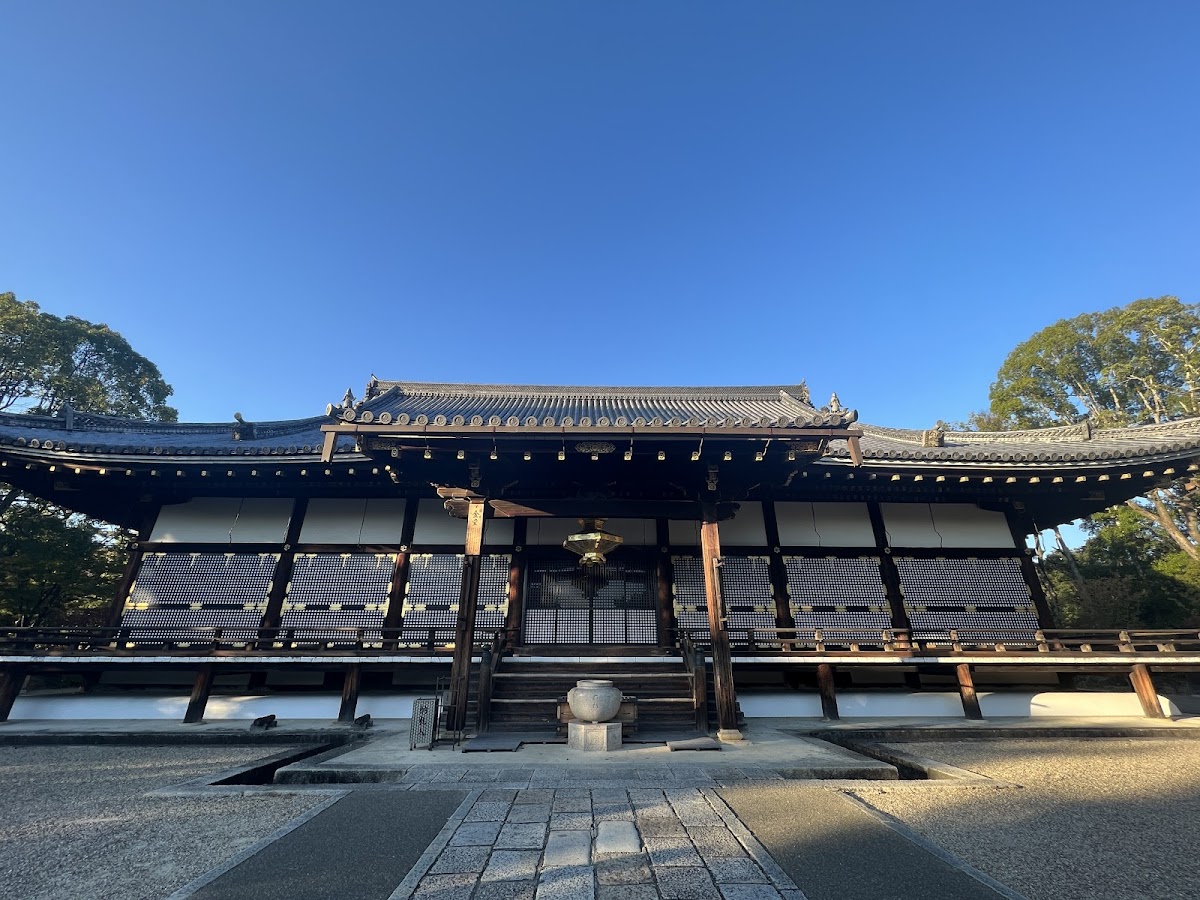
The main hall of Ninna-ji, designated a National Treasure, is an important structure. Originally a Momoyama-period palace building that was relocated, it houses the principal image of Amida Buddha and his two attendants. View this alongside the cherry blossoms.
Imperial Residence and Gardens
The imperial residence comprises the Shindō, White Study, and Black Study, featuring interior sliding door paintings by the Kanō school (reproductions). The north and south gardens are beautiful, offering seasonal scenery beyond the cherry blossom period.
Five-Story Pagoda
Built in the early Edo period, this five-story pagoda stands 36.18 meters tall and features the unusual characteristic of nearly equal-sized roofs across all levels. Experience the beauty of the pagoda itself in addition to its combination with cherry blossoms.
Reihōkan
During special spring and autumn exhibitions, Ninna-ji’s valuable cultural treasures are displayed at Reihōkan. National Treasures and Important Cultural Properties including Buddhist statues, paintings, and calligraphy can be viewed.
Annual Events at Ninna-ji
Beyond the cherry blossom season, Ninna-ji hosts various annual events.
Major Annual Events
- January 1–3: Shushōe (Correction Ceremony)
- Early to mid-April: Omuro Sakura blooming period
- Mid-May: Omuro-ryū Flower Arrangement Festival
- Early October: Moon-viewing gathering
- Mid to late November: Autumn foliage peak season
- December 31: New Year’s Eve bell-ringing
Autumn Foliage Season Also Recommended
Ninna-ji is known not only for cherry blossoms but also as an autumn foliage destination. From mid to late November, the temple grounds’ Japanese maples and other trees turn brilliant colors, creating beautiful views in combination with the five-story pagoda and Kondō.
Frequently Asked Questions
When is the best time to view Ninna-ji’s cherry blossoms?
Ninna-ji’s Omuro Sakura typically reaches peak bloom in mid-April. Blooming approximately two weeks later than other cherry blossom sites in Kyoto (Somei Yoshino), visiting after early April is recommended. However, as blooming dates vary with weather, confirming the bloom status before visiting is advisable.
What is the admission fee?
Standard imperial residence viewing costs ¥500 for adults and ¥300 for elementary and junior high school students. During the Omuro Sakura blooming period, the blossoming inner gate area viewing fee is ¥500 for adults and ¥200 for students. The area from the Niō Gate to the inner gate is free to view.
Is parking available?
Ninna-ji has a visitor parking lot accommodating approximately 100 vehicles (¥500 for standard cars). However, during the cherry blossom season, parking becomes extremely congested, making public transportation strongly recommended. Particularly convenient is the Keifuku Railway’s Omuro Ninna-ji Station, just a 3-minute walk away.
What is Omuro Sakura?
Omuro Sakura is a collective term for late-blooming double-flowering cherry trees planted at Ninna-ji, characterized by their low height of 2–3 meters. This stunted growth is attributed to the temple’s clayey, hard soil. Known as a cherry blossom destination since the Edo period, these cherry blossoms are even featured in haiku by Yosa Buson.
How much time should I plan for a visit?
For viewing cherry blossoms and the main temple structures, allow 1–2 hours. If also viewing the imperial residence and Reihōkan in detail, 2–3 hours is appropriate. Those wishing to spend considerable time on photography should plan additional time.
How can I avoid crowds?
Visiting early on weekdays, especially early in the morning (just after opening), is recommended for avoiding crowds. The 10:00 AM to 2:00 PM period, particularly on weekends and holidays, experiences severe crowding. Visiting slightly before peak bloom or during the beginning of bloom can also provide relatively uncrowded viewing experiences.
Conclusion | Experience Kyoto’s Cherry Blossom Culture at Ninna-ji
Ninna-ji is both a prestigious World Heritage temple and a premier cherry blossom destination in Kyoto, captivating visitors each spring with its distinctive Omuro Sakura. The low-positioned cherry blossoms offer a unique beauty found nowhere else, and their combination with historic structures like the five-story pagoda and Kondō represents quintessential Kyoto scenery. Its late-blooming nature provides an advantage for those who miss earlier cherry blossom seasons elsewhere.
When visiting, confirm the blooming status beforehand and consider early-morning or weekday visits to avoid crowds for a more enriching cherry blossom experience. Combining a visit with nearby temples like Ryoan-ji and Myōshin-ji allows simultaneous enjoyment of Kyoto’s World Heritage sites and cherry blossoms.
Experience the fusion of history, culture, and natural beauty that Ninna-ji’s cherry blossoms offer. It will surely become an unforgettable memory of Kyoto’s spring.