Matabe Sakura (Hongo no Taki Sakura) Complete Guide|Thoroughly Explaining a Cherry Blossom Destination in Uda City, Nara Prefecture
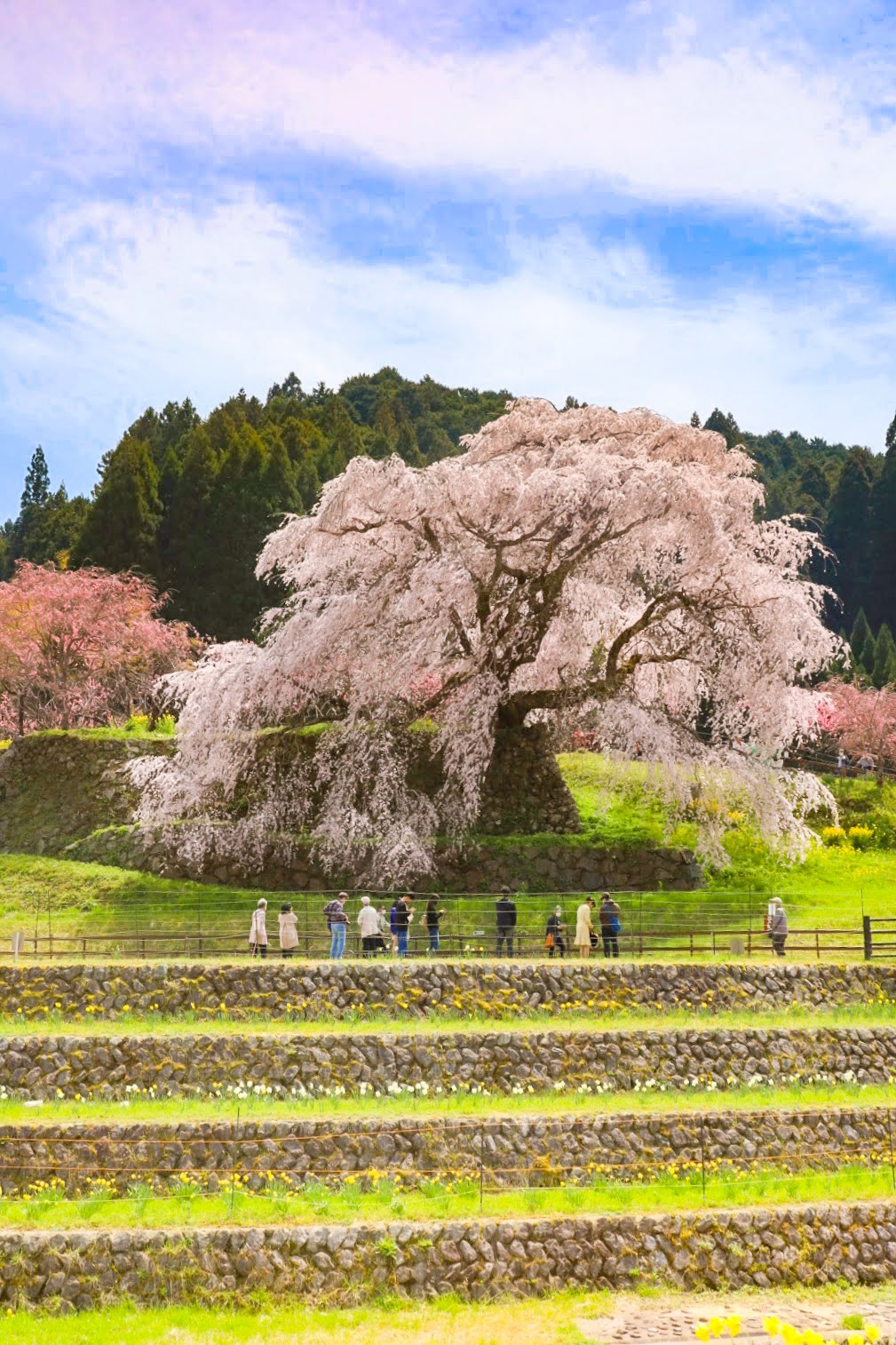
The Matabe Sakura that blooms in Hongo, Uda City, Nara Prefecture is a magnificent weeping cherry tree said to be 300 years old. Also called the “Hongo no Taki Sakura” (Hongo Waterfall Cherry), this single cherry tree is known for its spectacular branching that looks like a waterfall cascading down. It attracts many tourists and photographers annually as one of Nara Prefecture’s most famous cherry blossom destinations.
What is Matabe Sakura? The Charm of One of Nara’s Finest Cherry Trees
The Matabe Sakura is a precious single cherry tree designated as a protected tree in Nara Prefecture. A giant tree over 13 meters in height and approximately 3 meters in trunk circumference, it produces pale pink flowers covering its branches in spring. Due to its overwhelming presence, it gained nationwide fame after being used in the opening footage of NHK’s 2000 historical drama “Aoi Tokugawa Sandai.”
The elegantly drooping branches characteristic of weeping cherry trees flow down just like a waterfall, giving rise to its alternate name “Taki Sakura” (Waterfall Cherry). When in full bloom, countless flowers bloom magnificently from the widely spread branches, overwhelming all who visit with its beauty.
Ancient Cherry Tree with 300 Years of History
This cherry tree, said to be 300 years old according to one theory, has been rooted in Hongo since the Edo period, witnessing the long history of the land. A lifespan of 300 years corresponds to more than ten human generations, making this tree an embodiment of the region’s history itself.
The impact it has when seen in person far exceeds what the numbers of approximately 3 meters trunk circumference and 13 meters height suggest. The thick trunk with branches extending in all directions seems to express life force itself.
The Legend of Sengoku Warlord Gotō Matabei
The name “Matabe Sakura” originates from the legend of Gotō Matabei (Gotō Motoji), a warrior of the Sengoku period. Serving Toyotomi Hideyori and active in the Summer Campaign of Osaka, Gotō Matabei was known as a fierce and valiant warrior.
Gotō Matabei’s Connection to Hongo
Local legend in the Hongo area tells that Gotō Matabei fled to this place and spent the remainder of his life as a Buddhist monk. The location where this weeping cherry stands is said to be the ruins of the Gotō family estate, and locals have affectionately called it “Matabe Sakura” for centuries.
While historical records state that Gotō Matabei died in the Summer Campaign of Osaka, a legend persists that he actually survived and settled in hiding in Hongo. The truth of this legend remains unclear, but the cherry tree continues to bloom together with the people’s memories of the region.
Connection to Kuroda Kanbe
Gotō Matabei had a history of serving under Kuroda Kanbe (Kuroda Josui), known as a confidant of Toyotomi Hideyoshi. After gaining experience in the Kuroda household, he later became a retainer of Toyotomi Hideyori and served as a major warlord on the Toyotomi side during the Osaka Campaign. This historical background adds depth and narrative to this cherry tree.
Viewing Season and Blooming Period
The best time to view the Matabe Sakura is typically from early April to mid-April. Since it is located at a relatively high elevation within Nara Prefecture, it blooms somewhat later than cherry blossoms in the city.
Monthly Bloom Status
Late March: Buds begin to swell, and in early bloom years, blossoms may start to appear.
Early April: The time when most years reach full bloom. Cherry blossom festivals are held during this period.
Mid-April: The transition from full bloom to the beginning of petals falling. Cherry blossom snowstorms are also beautiful sights during this time.
Since the blooming period varies depending on climate conditions, it is recommended to check the latest bloom information from the Uda City Tourism Association before visiting.
Illumination Information
Night illumination is provided during the peak viewing period. The Matabe Sakura glowing in darkness displays a fantastical beauty different from daytime. The pale pink flowers illuminated and floating against the night sky create a dreamlike scenery.
The typical illumination time is from sunset to around 9 PM, but this may vary by year, so prior confirmation is necessary.
Cherry Blossom Festival and Events
A “Matabe Sakura Festival” is held in coordination with the blooming period, and during this time the area is filled with many cherry blossom viewers. In typical seasons, the festival attracts approximately 50,000 to 60,000 tourists, making it one of Nara Prefecture’s most prominent cherry blossom destinations.
Ways to Enjoy During Festival Period
During the festival period, temporary stalls sell local specialty products, allowing visitors to enjoy flavors unique to Uda City. Additionally, temporary parking areas are established and access is improved.
The site is known as an excellent spot for photographers, with enthusiasts setting up tripods from early morning. Particularly when peach blossoms bloom in the background, the harmony between the pink of the cherry blossoms and the deeper pink of the peach blossoms is spectacular.
A Duet with Peach Blossoms Blooming in the Background
One of the great charms of the Matabe Sakura is the peach orchard spreading in the background. When the cherry blossom blooming period coincides with the peach blossom season, a luxurious scene unfolds where pale pink cherry blossoms and deep pink peach blossoms can be enjoyed simultaneously.
This collaboration between cherry blossoms and peach blossoms, unique to Matabe Sakura, captivates many photographers and tourists. The composition of the Matabe Sakura in the foreground with the peach orchard in the background against a blue sky creates a beauty reminiscent of painting.
Access Methods
Location
Address: Hongo, Uda City, Nara Prefecture
Access by Public Transportation
Train and Bus:
- Get off at Kintetsu Osaka Line “Haibara Station”
- Take the Nara Kotsu Bus heading to “Oda”
- Get off at “Oda” bus stop and walk approximately 25 minutes
During the peak cherry blossom viewing period, temporary buses may run from Haibara Station to Matabe Sakura. Details can be confirmed on the official Nara Kotsu website.
Access by Automobile
- Approximately 25 minutes from “Hari IC” on the Meihan Expressway
- Approximately 40 minutes from “Tenri IC” on the Nishi-Meihan Expressway
Temporary parking areas are established during the cherry blossom festival period. However, the weekends during peak bloom are very congested, so early arrival is recommended. It is a few minutes walk from the parking area to the cherry tree.
Parking Information
There is free parking during regular periods, but during the festival period a cooperation fee (approximately 500 yen) may be required. Since the number of parking spaces is limited, please consider using public transportation.
Nearby Sightseeing Spots
When visiting Matabe Sakura, you can also enjoy nearby attractions.
Tenekiji Temple’s Weeping Cherry Blossom
A magnificent weeping cherry blossom stands at Tenekiji Temple, approximately 5 minutes walk from Matabe Sakura. While not as large as Matabe Sakura, its picturesque scenery blends beautifully with the temple’s atmosphere.
Kagiirohi Hill Manyō Park
A historically significant area mentioned in the Man’yōshū poetry collection, with an observation platform offering panoramic views of the Yamato Basin. Located approximately 15 minutes by car from Matabe Sakura, it also offers cherry blossoms in spring.
Uda Animal Park
A facility for interacting with animals and popular with families. Entry is free, allowing visitors to interact with goats, sheep, ponies, and other animals. Approximately 20 minutes by car from Matabe Sakura.
Nara Kaede no Sato Hirara
Famous as a fall foliage spot, but spring greenery is also beautiful. Approximately 1,200 maple trees are planted here, offering natural beauty in all four seasons.
Ryūmon-dake
A popular hiking course with spectacular views from the summit. Recommended for those who want to fully enjoy nature.
Photography Tips
Matabe Sakura is extremely popular among photography enthusiasts. Here are some tips for capturing beautiful photographs.
Best Photography Times
Early Morning: Few visitors, and cherry blossoms illuminated by morning light are beautiful. Soft light gently envelops the blossoms.
Evening: Cherry blossoms dyed by the setting sun are fantastical. The magical hour on clear days is an ideal photo opportunity.
Night: Illuminated cherry blossoms present a completely different appearance from daytime.
Recommended Angles
- Frontal composition capturing the entire tree with the peach orchard in the background
- Looking up from beneath the tree to emphasize the overlapping branches and flowers
- Side photography to express the waterfall-like flow of branches
- Close-up shots of flowers with telephoto lens are also beautiful
Viewing Precautions
Etiquette and Rules
- The cherry tree stands on private property of the Gotō family; entry into the grounds is limited to designated areas
- Be careful not to break branches or touch the trunk
- Take all garbage with you
- When using tripods, be considerate of other visitors
Congestion Management
Weekends during peak bloom are very crowded. Relatively quiet times are early morning and weekdays. For those wishing to view leisurely, these time periods are recommended.
Nearby Accommodations
The Uda City area has convenient lodging facilities for cherry blossom viewing.
Nanano-ne
A hot spring inn in Uda City offering cuisine prepared with local ingredients. Good accessibility to Matabe Sakura.
Other Lodging Options
Business hotels are available around Haibara Station at reasonable rates. Expanding the search to Sakurai City or Kashihara City offers a wider selection of accommodations.
Basic Information Summary
Name: Matabe Sakura (Hongo no Taki Sakura)
Location: Hongo, Uda City, Nara Prefecture
Tree Species: Weeping Cherry Blossom
Tree Age: Approximately 300 years
Tree Height: Approximately 13 meters
Trunk Circumference: Approximately 3 meters
Best Viewing Time: Early April to mid-April
Designation: Nara Prefecture Protected Tree
Inquiries: Uda City Tourism Association
Entry Fee: Free (cooperation fee may be requested during festival period)
Parking: Available (may be paid during festival period)
Other Cherry Blossom Spots in Uda City
Uda City has several beautiful cherry blossom spots in addition to Matabe Sakura.
Butsuryūji Temple’s Thousand-Year Cherry
A cherry tree said to be 900 years old and one of Nara Prefecture’s oldest and largest, designated as a natural monument. It allows visitors to experience the dignity of ancient trees different from Matabe Sakura.
Ōno Temple’s Cherry Blossoms
Cherry blossom rows along the Murōgawa River are beautiful, with a striking contrast against the cliff-side Buddha on the opposite bank.
Conclusion: The Value of Visiting Matabe Sakura
The Matabe Sakura in Uda City, Nara Prefecture is a cherry blossom destination packed with many attractions: 300 years of history, legends of a Sengoku warlord, spectacular waterfall-like branching, and its duet with peach blossoms in the background.
More than twenty years have passed since it became nationally known through NHK’s 2000 historical drama, yet its popularity remains undiminished, continuing to captivate tourists and photographers year after year.
If planning spring sightseeing in Nara, Matabe Sakura is a must-see destination. Standing beneath the full-bloom cherry blossoms, you can feel the life force blooming across 300 years of time and the romance woven by the legend of a Sengoku warlord.
Since the peak viewing period is brief, check bloom information regularly to visit at the perfect time. A cherry blossom encounter that will remain a cherished memory for a lifetime surely awaits you.