Complete Guide to Sakura at Daigoji Temple|Enjoying Cherry Blossoms at a World Heritage Site, Kyoto’s Premier Flower-Viewing Destination
Daigoji Temple, located in Fushimi Ward, Kyoto City, Kyoto Prefecture, is one of Kyoto’s most renowned cherry blossom viewing spots, known by the epithet “Hana no Daigoji” (Daigoji of Flowers). As the head temple of the Shingon Daigoji School, registered as a World Heritage Site, this temple is famous for the “Daigoji Flower Viewing” hosted by Toyotomi Hideyoshi. When spring arrives, approximately 700 to 1,000 cherry trees adorn the temple grounds in brilliant colors.
This article comprehensively introduces information to maximize your enjoyment of cherry blossom viewing at Daigoji Temple, including the charm of Daigoji’s sakura, highlights, blooming season, access methods, and nearby tourist attractions.
Daigoji Temple|The Head Temple of the Shingon Daigoji School Registered as a World Heritage Site
The History and Origin of Daigoji Temple
Daigoji Temple traces its beginning to 874 (Jogan 16), when Genshin-daishi Kōbō Daishi’s grandstudent, Genshin Daishi, established a hermitage on Daigoji Mountain. The entire Daigoji Mountain serves as the temple grounds, and the expansive premises are divided into Upper Daigoji and Lower Daigoji.
As the head temple of the Shingon Daigoji School, this temple boasts a history of over 1,100 years and was registered as a UNESCO World Cultural Heritage Site in 1994 as part of “Cultural Properties of Ancient Kyoto.” It is known as a precious facility housing numerous national treasures and important cultural properties, conveying Japanese Buddhist culture to the present day.
The National Treasure Five-Story Pagoda and Treasure Trove of Cultural Properties
Daigoji Temple houses numerous national treasures and important cultural properties, among which the five-story pagoda is particularly famous as the oldest wooden structure in Kyoto Prefecture. Built in 951 (Tenreki 5), this five-story pagoda is designated as a national treasure as the oldest extant wooden structure in Kyoto, and its elegant figure, approximately 38 meters in height, has become the symbol of Daigoji Temple.
Additionally, numerous highlights including the Sambo-in garden (special scenic beauty and special historic site), the Gold Hall, and the Medicine Master Hall are scattered throughout.
“Hana no Daigoji” (Daigoji of Flowers) – A Renowned Sakura Viewing Spot
The History of Daigoji Temple Becoming a Cherry Blossom Viewing Spot
Daigoji Temple became known as “Hana no Daigoji,” a cherry blossom viewing spot, following the “Daigoji Flower Viewing” hosted by Toyotomi Hideyoshi in 1598 (Keicho 3). Hideyoshi is said to have gathered cherry trees from throughout the Kinai region and planted over 700 cherry trees within the temple grounds. This grand flower viewing was attended by approximately 1,300 people, including the Kita-Mandokoro and Yodo-dono, and is remembered as the most splendid and ornate flower viewing in Japanese history.
After Hideyoshi’s death, the planting and protection of cherry trees continued at Daigoji Temple, and today approximately 700 to 1,000 cherry trees adorn the grounds, making it one of Kyoto’s premier cherry blossom viewing destinations.
Varieties and Characteristics of Daigoji’s Sakura
At Daigoji Temple, you can enjoy various cherry blossom varieties. The main varieties are as follows:
- Kawazu Sakura (Kawazu Cherry): The earliest blooming variety, beginning to bloom around the vernal equinox in Kenshinrin-en
- Shidare Sakura (Weeping Cherry): A variety characterized by elegant, drooping branches
- Somei Yoshino: Japan’s most common cherry variety, occupying much of the temple grounds
- Yamazakura (Mountain Cherry): A native Japanese variety evoking natural charm
- Yaezakura (Double Cherry): A showy variety with overlapping petals
These cherry trees bloom successively over approximately three weeks, allowing visitors to enjoy different expressions of sakura depending on when they visit, which is a major attraction of Daigoji Temple.
Cherry Blossom Viewing Highlights at Daigoji Temple
The “Taikō Shidare Sakura” (Warlord Weeping Cherry) at Sambo-in
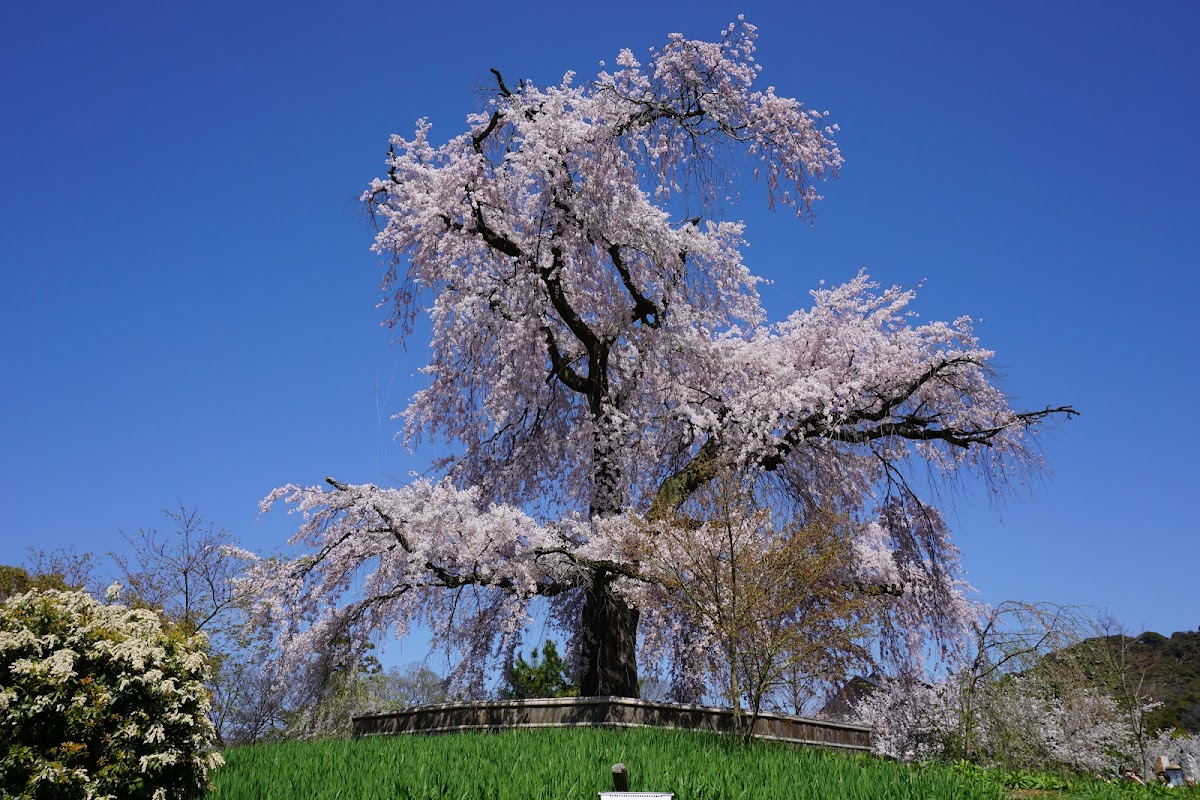
The most famous cherry blossom at Daigoji Temple is the “Taikō Shidare Sakura” at Sambo-in. This celebrated tree, said to be approximately 170 years old, is also called the “Tuyoku Sakura” because it was depicted by Japanese painter Okumura Tōgyū in his masterwork “Daigoji.”
This weeping cherry, evoking memories of Toyotomi Hideyoshi’s Daigoji flower viewing, is breathtaking when in full bloom, its flowers cascading like a waterfall. Its harmony with the Sambo-in garden is beautiful, making it a must-see spot for anyone visiting Daigoji Temple.
The Weeping Cherries of the Reihokan
The weeping cherries surrounding the Reihokan (Treasure Hall) are also among Daigoji Temple’s representative cherry blossom highlights. The large weeping cherry standing in the spacious grounds presents an elegant figure against the blue sky. The Reihokan also displays national treasures and important cultural properties housed at Daigoji Temple, allowing visitors to enjoy cultural property appreciation alongside cherry blossom viewing.
The Cherry Tree Lined Path Around the Nio Gate
The Nio Gate, the entrance to Daigoji Temple, is surrounded by a cherry tree-lined path centered on Somei Yoshino. The tunnel of cherry blossoms lining the approach path welcomes visitors in splendor. The combination of the Nio Gate and cherry blossoms is popular as a photography spot.
The Collaboration of the Five-Story Pagoda and Sakura
The collaboration between the national treasure five-story pagoda and cherry blossoms is a scenic view unique to Daigoji Temple. The landscape created by Kyoto’s oldest wooden structure and spring cherry blossoms symbolizes Japanese traditional beauty and captivates many visitors. Particularly breathtaking is the combination of the five-story pagoda against a blue sky and fully bloomed cherry blossoms.
The Kawazu Sakura of Kenshinrin-en
The beginning of the cherry blossom season is announced by the Kawazu sakura of Kenshinrin-en. This early blooming variety, which begins to bloom around the vernal equinox, is characterized by deep pink flowers and allows visitors to feel the arrival of spring slightly ahead of other cherry blossoms.
The Mountain Cherries of the Upper Daigoji Area
For those confident in their physical fitness, venturing to the Upper Daigoji area is also recommended. At Upper Daigoji on the mountaintop, visitors can enjoy natural mountain cherries. While climbing the mountain path is necessary, the mountain cherries blooming in silence offer a different charm from those in Lower Daigoji.
Blooming Season and Peak Viewing Time for Daigoji’s Sakura
Typical Annual Blooming Schedule
Since Daigoji Temple’s cherry blossoms have different blooming periods depending on variety, visitors can enjoy various sakura over approximately three weeks.
- Mid to Late March: Kawazu sakura begin to bloom
- Late March: Weeping cherries bloom
- Late March to Early April: Somei Yoshino at peak bloom (peak season)
- Early to Mid-April: Mountain cherries and double cherries bloom in succession
The most favorable viewing time, when the most cherry blossoms are in full bloom, is typically from late March to early April. During this period, the entire temple grounds are dyed in shades of cherry blossom pink, creating a scene worthy of the name “Hana no Daigoji.”
How to Confirm Blooming Status
Since blooming times fluctuate depending on the year’s climate, it is recommended to check the latest blooming information before your visit. Daigoji Temple’s official website updates blooming status as “flower information,” and information is also provided by the Kyoto City Tourism Association and various sakura blooming information websites.
The Daigoji Flower Viewing|Toyotomi Hideyoshi’s Extravagant Flower Viewing
The Historic “Daigoji Flower Viewing”
On March 15, 1598, Toyotomi Hideyoshi hosted a grand flower viewing at Daigoji Temple. This “Daigoji Flower Viewing” is known as the largest event Hideyoshi hosted in his lifetime. Hideyoshi, who loved the cherry blossoms at Daigoji Temple, gathered over 700 cherry trees from throughout the Kinai region and had them planted within the temple grounds. He then invited approximately 1,300 people, including the Kita-Mandokoro, Yodo-dono, and his concubines, and hosted an extravagantly ornate banquet.
For this flower viewing, Hideyoshi refined the Sambo-in garden, held tea ceremonies, and staged Noh performances, sparing no expense in the production. Five months after this flower viewing, Hideyoshi passed away, but the Daigoji Flower Viewing is remembered as the most famous flower viewing in Japanese history.
The “Toyotaiko Flower Viewing Procession” Recreated in Modern Times
Every year during the cherry blossom season, the “Kiyotaki Gongen Sakura-kai” is held at Daigoji Temple, as part of which the “Toyotaiko Flower Viewing Procession” is performed. In this procession, participants dressed as Toyotomi Hideyoshi, the Kita-Mandokoro, Yodo-dono, and others, attired in the gorgeous clothing of the era, process through the temple grounds.
This event recreating a historical scroll provides visitors not only with the opportunity to enjoy Daigoji’s cherry blossoms but also with a precious opportunity to experience the historical romance of over 400 years ago.
Daigoji Temple Tourist Information
Viewing Hours and Admission Fees
Viewing Hours
- March to the first Sunday of December: 9:00 AM to 5:00 PM
- Day after the first Sunday of December to end of February: 9:00 AM to 4:30 PM
Admission Fees
- Regular period (excluding spring and autumn periods): Adults ¥1,000, Junior and Senior High School Students ¥700
- Spring and Autumn periods (cherry blossom and autumn leaf season): Adults ¥1,500, Junior and Senior High School Students ¥1,000
During the spring cherry blossom season, it becomes a special viewing period with different admission fees. Please note that the fee is a combined ticket covering three areas: Sambo-in, Reihokan, and Garan.
Access Methods
Access by Train
Daigoji Temple is easily accessible by train.
- Kyoto Municipal Subway Tozai Line “Daigoji Station”: Approximately 10 minutes on foot from Exit 2
- JR Yamashina Station: Approximately 15 minutes by Keihan Bus heading to “Daigoji Sanbooin,” getting off at the final stop
- Keihan Electric Railway “Rokujizo Station”: Transfer to Kyoto Municipal Subway Tozai Line and get off at Daigoji Station
During the cherry blossom season, considerable congestion is expected, so using public transportation is strongly recommended.
Access by Car
- Approximately 20 minutes from “Kyoto East IC” on the Meishin Expressway
- Approximately 15 minutes from “Kamitorigawa Exit” on the Hanshin Expressway
Parking
Daigoji Temple has a paid parking lot (approximately 100 spaces), but it becomes extremely crowded during cherry blossom season. The parking fee for regular vehicles is ¥1,000. The lot often reaches capacity, so it is recommended to visit with ample time or use public transportation.
Location and Contact Information
- Address: 〒601-1325 22 Daigoji-higashi-ōji-chō, Fushimi Ward, Kyoto City, Kyoto Prefecture
- Phone: 075-571-0002
- Official Website: https://www.daigoji.or.jp/
Recommended Tourist Routes Around Daigoji Temple
Half-Day Course (approximately 3 hours)
Here is a half-day sightseeing course centered on Daigoji Temple.
- Arrival at Daigoji Subway Station (9:00 AM)
- Daigoji Temple Nio Gate (9:10 AM): Enjoy the cherry tree-lined path while entering
- Sambo-in (9:30 AM): View the Taikō shidare sakura and garden
- Reihokan (10:30 AM): Appreciate the weeping cherry and national treasures and important cultural properties
- Gold Hall and Five-Story Pagoda (11:30 AM): National treasure five-story pagoda and cherry blossom collaboration
- Kenshinrin-en (12:00 PM): Depending on the season, view Kawazu sakura and other varieties
- Lunch (12:30 PM): Savor Kyoto cuisine at nearby dining establishments
Full-Day Course (Including Upper Daigoji)
For those with confidence in their physical fitness, a course extending to Upper Daigoji is also recommended.
- Morning: Explore Lower Daigoji with the half-day course above
- Afternoon: Hike to Upper Daigoji (approximately 2 hours round trip)
- At Upper Daigoji, view national treasure buildings including the Medicine Master Hall and Kiyotaki Shrine
- Enjoy the panoramic view from the mountaintop and natural mountain cherries
The hiking path to Upper Daigoji is well-maintained but requires considerable fitness. Comfortable hiking shoes and appropriate clothing are recommended.
Tourist Attractions Around Daigoji Temple
Kajiuji Temple (Kajiū-ji)
Kajiuji Temple, located approximately 2 kilometers north of Daigoji Temple, is the head temple of the Shingon Yamashina School. The grounds feature a beautiful garden centered on Himuro Pond, and during cherry blossom season, the sight of sakura reflected in the pond around its perimeter is breathtaking. It is an ideal distance to visit together with Daigoji Temple.
Zuishinin Temple
Zuishinin Temple, famous as being associated with Ono no Komachi, is located approximately 3 kilometers from Daigoji Temple. While known as a plum flower viewing spot, cherry blossoms can also be enjoyed in spring. The temple has a unique charm with exhibitions related to Ono no Komachi and collaborations with contemporary art.
Fushimi Inari Taisha
Fushimi Inari Taisha, located approximately 5 kilometers west of Daigoji Temple, is internationally famous for its thousand vermillion torii gates. During cherry blossom season, the contrast between the vermillion torii and the sakura is beautiful, allowing visitors to fully enjoy Kyoto’s spring in conjunction with Daigoji Temple.
Cherry Tree-Lined Path Along the Yamashina Aqueduct
Heading from Daigoji Station toward Yamashina Station, a cherry tree-lined path continues along the Lake Biwa Aqueduct. This approximately 4-kilometer cherry blossom tunnel is a beloved flower-viewing spot for local residents.
Tips for Enjoying Daigoji Temple’s Cherry Blossoms
Tips for Avoiding Crowds
During the peak cherry blossom viewing season, particularly on weekends, the temple becomes very crowded. Here are tips for avoiding congestion.
- Early morning visits: Around 9:00 AM, shortly after opening, is relatively uncrowded
- Weekday visits: If possible, visiting on weekdays is recommended
- Slightly offset peak viewing time: Avoiding peak weekend blooms, the beginning and end of blooming also have their charm
Best Photography Spots
Recommended spots for photography include:
- Taikō shidare sakura at Sambo-in: Morning front lighting is recommended
- Five-story pagoda and sakura: Can be photographed from various angles, but capturing the entire structure from a slight distance is key
- Weeping cherry at Reihokan: Photographing against a blue sky is striking
- Nio Gate and cherry tree-lined path: The composition from the approach is beautiful
Clothing and Essentials
- Comfortable walking shoes: The grounds are expansive, and hiking boots are necessary for Upper Daigoji
- A layer to wear: From late March to early April, mornings and evenings can be chilly
- Sunscreen and hat: On sunny days, the sun can be intense
- Camera or smartphone: Ensure sufficient battery charge
Dining
There are tea shops and vendors on the grounds, but they are crowded during cherry blossom season. Dining options in the surrounding area are limited, so it is recommended to plan meals in advance. Please refrain from eating on the grounds except in designated areas.
Daigoji Temple Through the Four Seasons|Attractions Beyond Cherry Blossoms
Daigoji Temple is famous as a cherry blossom viewing spot, but it is a temple where you can enjoy the beauty of each season.
Spring (Beyond Cherry Blossoms)
After the cherry blossoms end, the season of fresh greenery arrives. The five-story pagoda and gold hall surrounded by lush green trees evoke the refreshing atmosphere of spring.
Summer
In summer, the verdant grounds create a cool atmosphere. Visitors can enjoy viewing lotus flowers blooming in ponds and taking a leisurely stroll in the shade.
Autumn
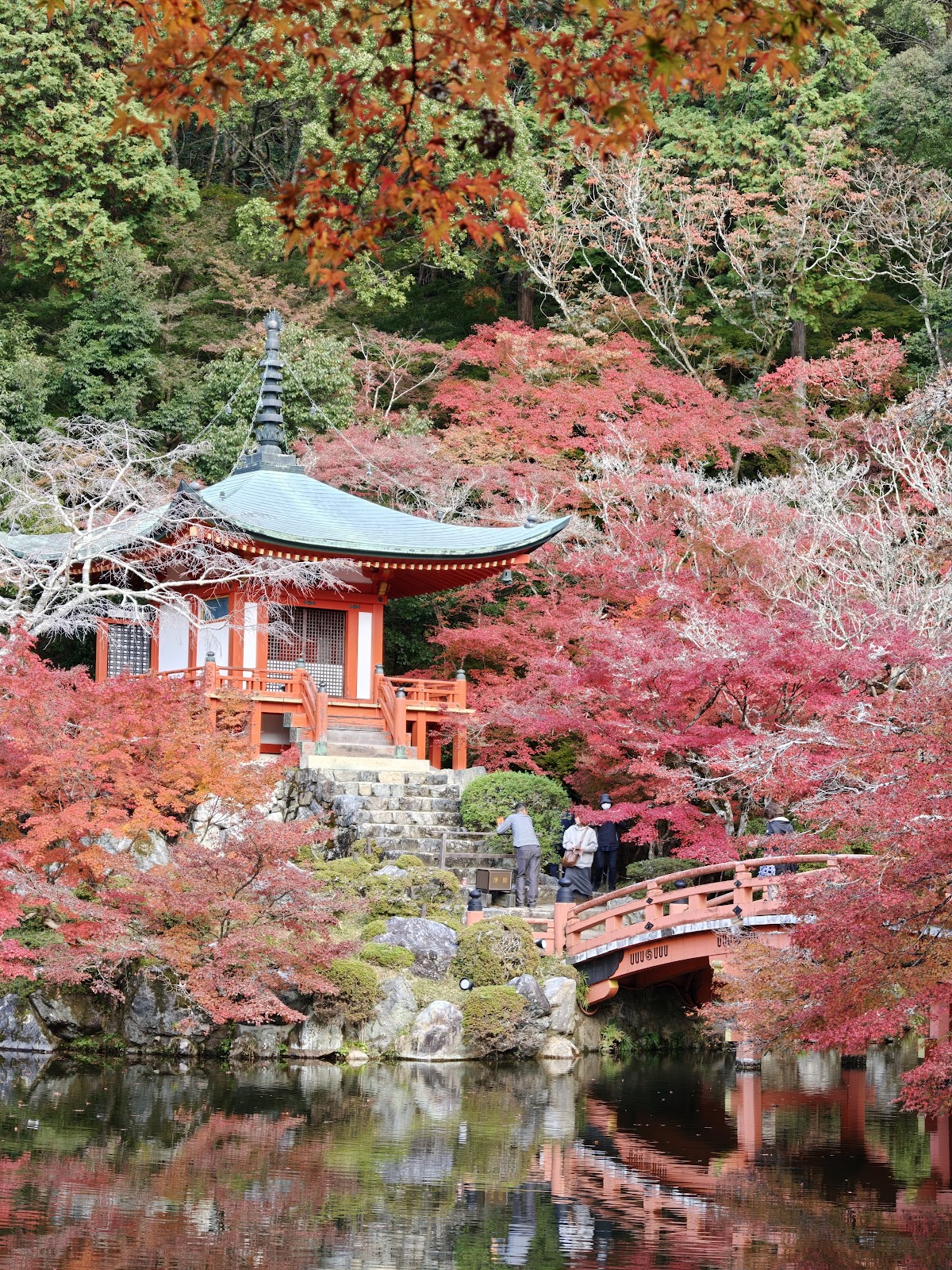
The autumn foliage season is also a highlight of Daigoji Temple. Trees throughout the grounds turn red and yellow, creating a beautiful landscape in contrast with the five-story pagoda and buildings.
Winter
Daigoji Temple blanketed in snow possesses extraordinary beauty. Particularly the five-story pagoda with accumulated snow has the quality of ink wash painting.
Frequently Asked Questions (FAQ)
Q1: When is the best time to view cherry blossoms at Daigoji Temple?
A1: The typical peak viewing time is from late March to early April. However, Kawazu sakura can be enjoyed from mid-March, and double cherries bloom through mid-April, allowing visitors to appreciate various sakura over approximately three weeks. Since blooming times fluctuate depending on annual weather conditions, it is recommended to check the latest blooming information before your visit.
Q2: How do I access Daigoji Temple?
A2: It is approximately 10 minutes on foot from Exit 2 of Daigoji Station on the Kyoto Municipal Subway Tozai Line. During cherry blossom season, congestion is expected, so using public transportation is strongly recommended. Those driving can use the parking lot (approximately 100 spaces, ¥1,000), but please note it often reaches capacity.
Q3: How much is admission?
A3: During cherry blossom season (spring period), it becomes a special viewing period with admission of ¥1,500 for adults and ¥1,000 for junior and senior high school students. During regular periods, it is ¥1,000 for adults and ¥700 for junior and senior high school students. The admission is a combined ticket covering three areas: Sambo-in, Reihokan, and Garan.
Q4: What is the most famous cherry blossom at Daigoji Temple?
A4: The “Taikō shidare sakura” at Sambo-in is the most famous. This 170-year-old weeping cherry is also called the “Tuyoku Sakura” because it was depicted by Japanese painter Okumura Tōgyū in his work “Daigoji.” As a celebrated tree evoking memories of Toyotomi Hideyoshi’s Daigoji flower viewing, it attracts many visitors.
Q5: How can I avoid crowds?
A5: Early morning visits around 9:00 AM or weekday visits are recommended. Another option is to visit slightly offset from peak bloom, during early or late blooming. Peak weekends are particularly crowded, so visiting with ample time is recommended.
Q6: Should I venture to Upper Daigoji?
A6: It is recommended for those with confidence in their fitness and ample time. The hiking path to Upper Daigoji takes approximately 2 hours round trip, but at the summit, you can enjoy national treasure buildings like the Medicine Master Hall and mountain cherries in their natural setting. Comfortable shoes and appropriate clothing are recommended.
Q7: What are photography tips at Daigoji Temple?
A7: Recommended spots include the Taikō shidare sakura at Sambo-in (morning front lighting recommended), the five-story pagoda and sakura collaboration, the weeping cherry at Reihokan (photographed against blue sky), and the Nio Gate and cherry tree-lined path. A wide-angle lens helps capture the expansive landscape of the grounds.
Q8: Are there other cherry blossom viewing spots around Daigoji Temple?
A8: Kajiuji Temple (approximately 2 km away), Zuishinin Temple (approximately 3 km away), and the cherry tree-lined path along the Yamashina Aqueduct are available. Extending slightly further, Fushimi Inari Taisha (approximately 5 km away) also offers cherry blossom viewing. It is possible to visit multiple spots in a single day.
Conclusion|Fully Enjoying Kyoto’s Spring at World Heritage Daigoji Temple
Daigoji Temple is the head temple of the Shingon Daigoji School registered as a World Heritage Site, boasting a history of over 1,100 years. Known as “Hana no Daigoji,” it is a premier cherry blossom viewing spot and historically significant as the venue for Toyotomi Hideyoshi’s “Daigoji Flower Viewing.”
Approximately 700 to 1,000 cherry trees adorn the grounds in brilliant colors, with varieties including Kawazu sakura, weeping cherries, Somei Yoshino, mountain cherries, and double cherries blooming successively over approximately three weeks. Attractions abound, including the Taikō shidare sakura at Sambo-in, the weeping cherries at the Reihokan, and the collaboration of the national treasure five-story pagoda with sakura.
With excellent access, approximately 10 minutes on foot from Daigoji Station on the Kyoto Municipal Subway Tozai Line, and special viewing periods during cherry blossom season attracting numerous visitors, early morning or weekday visits are recommended to avoid crowds.
Surrounding areas feature other cherry blossom viewing spots such as Kajiuji Temple, Zuishinin Temple, and the cherry tree-lined path along the Yamashina Aqueduct, allowing visitors to spend a full day enjoying Kyoto’s spring.
Sacred cherry blossoms blooming within a World Heritage site, the tradition of the Daigoji flower viewing evoking historical romance, harmony with national treasures and important cultural properties—Daigoji Temple offers visitors an unforgettable experience as Kyoto’s premiere spring cherry blossom viewing destination.
By all means, experience the beauty of “Hana no Daigoji” at Daigoji Temple this coming spring.