Complete Guide to Shinjuku Gyoen Cherry Blossoms 2026|Enjoy 70 Varieties at Tokyo’s Premier Cherry Blossom Destination
Why Shinjuku Gyoen is One of Tokyo’s Premier Cherry Blossom Spots
Shinjuku Gyoen is one of the most popular cherry blossom viewing destinations in Tokyo. It consistently ranks at the top of national rankings and attracts large crowds of flower viewers each spring. The secret to its popularity lies in its overwhelming diversity of approximately 70 varieties and 900 cherry trees, and its long blooming period spanning about two and a half months from mid-February through late April.
Despite being located in central Shinjuku, Shinjuku Gyoen boasts a vast expanse of 58.3 hectares. As a Meiji-era representative modern Western garden blending formal garden, landscape garden, and Japanese garden styles, it creates especially beautiful scenery during cherry blossom season. The sight of diverse cherry blossoms blooming sequentially amid the unique landscape created by approximately 10,000 trees including platanus, expansive lawns, and tulip trees is truly worthy of being called an oasis in the city.
The connection between Shinjuku Gyoen and cherry blossoms dates back to the Edo period. The “Kansakura-kai” (cherry blossom viewing gathering), which began as an imperial ceremony during the Meiji era, was relocated to Shinjuku Gyoen in the Taisho period, establishing its position as Tokyo’s premier cherry blossom destination. This historical background has led to the current rich collection of cherry blossom varieties.
Cherry Blossom Peak Viewing Times and Bloom Periods at Shinjuku Gyoen
Early-Blooming Cherries (Mid-February to Early March)
The cherry blossom season at Shinjuku Gyoen begins earlier than at other famous spots. In mid-February, Kanzakura (winter cherry) blossoms open, heralding the arrival of spring. Kanzakura is characterized by small, pale pink flowers and is a precious variety that blooms during the cold season.
Following this, from late February through early March, Kawazu cherry blossoms reach their peak. With distinctive deep pink petals, Kawazu cherry is particularly popular among early bloomers and allows visitors to enjoy the atmosphere of early spring. This period is relatively uncrowded, making it ideal for leisurely cherry blossom viewing.
Somei Yoshino Peak Viewing Period (Late March to Early April)
From late March, Somei Yoshino, the most iconic cherry variety, finally blooms. Shinjuku Gyoen has numerous Somei Yoshino plantings, and at full bloom the entire garden is enveloped in a pale pink hue—a spectacular sight. Somei Yoshino typically peaks from late March through early April, making this the busiest period at Shinjuku Gyoen.
Coinciding with Somei Yoshino, Shidarezakura (weeping cherry) also reaches its peak. The elegantly drooping branches create especially beautiful scenery in the Japanese garden areas. Additionally, Yohko cherry reaches its blooming peak in late March, adding vibrant pink color to the arrival of spring.
Double-Flowered Cherry Peak Viewing Period (Mid-April to Late April)
As Somei Yoshino begins to fade, Shinjuku Gyoen’s cherry blossom season enters its second half. From mid to late April, double-flowered varieties such as Ichiyou (single leaf), Kanzan (Mount Kanzaki), and Fugenzo (universal sage elephant) take center stage.
Ichiyou is a pale pink double-flowered variety characterized by its elegant appearance. Kanzan features luxurious deep pink double flowers that captivate viewers with their voluminous blooms. Fugenzo is a double-flowered cherry that transitions from white to pale pink, named for the unique characteristic of two leaves emerging from the flower’s center.
These double-flowered cherries offer a splendor different from Somei Yoshino, and the ability to enjoy cherries through late April is a charm unique to Shinjuku Gyoen. Finally, Kasumizakura blooms, bringing the long cherry blossom season to a close.
Recommended Cherry Blossom Viewing Spots at Shinjuku Gyoen
Cherry Blossom Garden Area
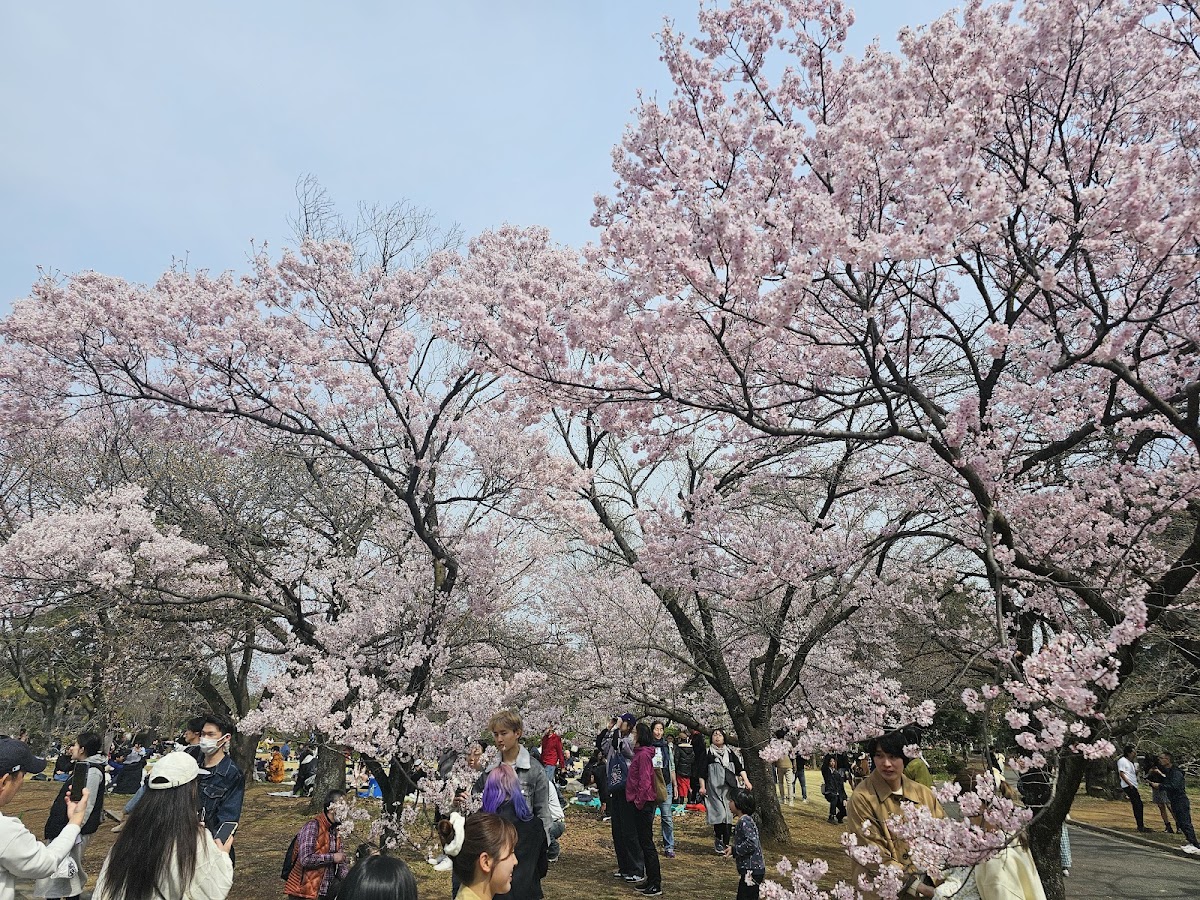
The area with the highest concentration of cherry blossoms at Shinjuku Gyoen is the Cherry Blossom Garden. Here, various cherry varieties are planted, allowing visitors to enjoy different cherries depending on the season all in one location. This popular spot offers the opportunity to enjoy picnics on spacious lawns while viewing diverse cherry blossoms.
In the Cherry Blossom Garden, approximately 70 cherry varieties including Kanzakura, Somei Yoshino, Yamazakura, Ichiyou, and Kanzan bloom sequentially. Since each variety differs in flower color, shape, and size, there is also an educational aspect to learning about cherry diversity.
Japanese Garden Area
The combination of a traditional Japanese garden with cherry blossoms creates a luxurious landscape found only at Shinjuku Gyoen. Particularly striking is the image of Shidarezakura reflected in the pond—a sight as beautiful as a painting—drawing many photography enthusiasts. This area is recommended for those who wish to quietly appreciate cherry blossoms in the serene atmosphere of a Japanese garden.
Strolling around the pond, visitors can enjoy cherries reflected on the water’s surface and the harmonious scenery of stone bridges with cherry blossoms. Flower viewing that evokes Japanese aesthetic sensibility is extremely popular with foreign tourists as well.
Landscape Garden Area
The landscape garden area, characterized by expansive lawns, allows visitors to enjoy cherry blossoms in an open, spacious environment. The contrast between high trees like tulip trees and sycamores with cherry blossoms is beautiful, offering the atmosphere characteristic of Western-style gardens.
In this area, many families and groups can be seen spreading leisure sheets for relaxed picnics. A distinctive feature of Shinjuku Gyoen is that alcohol is prohibited, allowing for calm and quiet flower viewing.
Shinjuku Gate Area
Beautiful cherry blossoms are also planted near Shinjuku Gate. Due to convenient access, visitors can enjoy cherries even during brief visits. With cherry blossoms spreading immediately upon entering the gate, one experiences the flower-viewing atmosphere from the moment of arrival.
Regarding the Spring Special Opening Period
Shinjuku Gyoen designates March 25 through April 24 annually as the “Spring Special Opening Period.” During this period, the garden remains open without closure, accommodating more visitors for cherry blossom enjoyment. While Mondays are normally closed, the park operates continuously during the special opening period, making it easier to visit on weekdays as well as weekends.
During the special opening period, cherry blossoms throughout the garden reach their peak, allowing visitors to enjoy varieties from early bloomers to late bloomers. However, this period experiences heavy congestion, and an advance reservation system is expected to be implemented in 2026 as well.
The advance reservation system was introduced for congestion mitigation, particularly on weekends and during peak bloom periods. By making advance reservations through the official website, visitors can enter smoothly. While entry without reservations may be possible in some cases, entrance restrictions may be implemented depending on crowding levels, making advance reservations recommended.
Access and Transportation Information
Train Access
Due to its central location, Shinjuku Gyoen is extremely convenient by train. There are three gates, each with different nearest stations.
Shinjuku Gate (Main Gate)
- Approximately 10-minute walk from South Exit of Shinjuku Station (JR, Keio Line, Odakyu Line)
- Approximately 5-minute walk from C1/C5 exits of Shinjuku-sanchome Station (Tokyo Metro Marunouchi, Fukutoshin, and Toei Shinjuku Lines)
Oikido Gate
- Approximately 5-minute walk from Exit 1 of Shinjuku-gyoen-mae Station (Tokyo Metro Marunouchi Line)
Sendagaya Gate
- Approximately 5-minute walk from Sendagaya Station (JR Sobu Line)
- Approximately 10-minute walk from Exit 1 of Kita-sando Station (Tokyo Metro Fukutoshin Line)
- Approximately 5-minute walk from A5 exit of Kokuritsu-Kyogijo Station (Toei Oedo Line)
During cherry blossom season, which is particularly crowded, public transportation is strongly recommended. When approaching from Shinjuku Station, Shinjuku Gate offers the easiest access, but for those wishing to avoid crowds, entry via Sendagaya Gate or Oikido Gate is also an option.
Parking
Shinjuku Gyoen has no dedicated parking facility. While several paid parking lots exist in surrounding areas, they often fill during cherry blossom season, making train access most suitable. For those who must drive, arriving very early or parking at a lot near a more distant station and commuting by train is an alternative approach.
Admission Fees and Operating Hours
Admission Fees
- General: ¥500
- Seniors (65 and over): ¥250
- Students (High school and above): ¥250
- Middle school and below: Free
Annual passes are also available at ¥2,000 for general admission and ¥1,000 for high school and above students. Annual passes are economical for those visiting four or more times yearly. Recommended for those wishing to visit during other seasons such as new green and autumn foliage.
Operating Hours
- 9:00 AM–4:00 PM (closing at 4:30 PM)
- Great Glasshouse: 9:30 AM–3:30 PM (closing at 4:00 PM)
Operating hours remain the same during the spring special opening period, though entrance restrictions may be implemented depending on congestion. For leisurely cherry blossom appreciation, visiting around 9:00 AM shortly after opening or after 3:00 PM during relatively quieter hours is recommended.
Closed Days
- Every Monday (if Monday is a national holiday, closed the following weekday)
- Year-end and New Year period (December 29–January 3)
However, the garden remains open without closure during the spring special opening period (March 25–April 24).
Rules and Etiquette for Flower Viewing at Shinjuku Gyoen
Shinjuku Gyoen has unique rules differing from other flower-viewing spots. These are established to conserve the environment and allow all visitors to enjoy the experience comfortably.
Prohibited Activities
- Alcohol Prohibited: Alcoholic beverages are completely prohibited from being brought in or consumed. This creates a quiet, serene atmosphere for cherry blossom appreciation.
- Recreational Equipment Prohibited: Use of balls, frisbees, badminton equipment, and similar items is prohibited.
- Pets Prohibited: Except for service animals such as guide dogs, pets are not permitted.
- Smoking: The entire garden is non-smoking.
- Bicycles Prohibited: Bicycles cannot be brought into the garden.
Recommended Ways to Enjoy
The standard style of flower viewing at Shinjuku Gyoen involves spreading a leisure sheet and eating lunch while leisurely appreciating cherry blossoms. Without alcohol available, attention is naturally focused on the beauty of the blossoms themselves, making it an ideal environment for families and those seeking quiet enjoyment.
Meals and beverages can be brought in, so preparing beforehand or purchasing from nearby convenience stores or department store food halls before entering is recommended. While food stands exist within the garden, they become crowded during cherry blossom season, making it more certain to bring provisions.
Crowding Conditions and Crowd-Avoidance Tips
Most Crowded Periods and Times
The most congested period at Shinjuku Gyoen during cherry blossom season is weekends from late March through early April when Somei Yoshino reaches full bloom. Lines for entry may form, particularly on Saturdays and Sundays from 10:00 AM to 2:00 PM.
Expected periods for fully booked reservation slots in 2026 include:
- Weekends during Somei Yoshino full bloom
- Weekday period during spring break
- Days with expected fair weather
Tips for Avoiding Crowds
- Early Morning Visit: Shortly after opening at 9:00–10:00 AM, the park is relatively uncrowded. Cherry blossoms in morning light are beautiful, and conditions are ideal for photography.
- Weekday Visit: Visiting on weekdays if possible is recommended. Particularly Tuesdays through Thursdays are less crowded than weekends.
- Late-Blooming Cherry Season: From mid-April onward, during the double-flowered cherry period, congestion is less severe than during Somei Yoshino season. Double-flowered varieties like Ichiyou and Kanzan are extremely beautiful, allowing relaxed flower viewing.
- Later Afternoon Hours: After 3:00 PM, numbers decrease as people head home, making the area less crowded. Since closing is 4:30 PM, visitors can still enjoy cherry blossoms for a short time.
- Confirm Advance Reservations: An advance reservation system is expected during March through April 2026. Secure reservations early on the official website.
Recommended Spots Near Shinjuku Gyoen
Lunch and Cafes
Numerous restaurants surround Shinjuku Gyoen. Recommended areas to visit before or after flower viewing include:
- Shinjuku-sanchome Area: Near Shinjuku Gate, with department store food halls for meal purchasing and restaurants for dining.
- Shinjuku-gyoen-mae Station Area: Many cafes and bakeries for convenient takeout.
- Sendagaya Area: Quiet cafes and restaurants scattered throughout.
Nearby Tourist Attractions
Spots to visit alongside Shinjuku Gyoen:
- Meiji Shrine: Within walking distance of Sendagaya Gate, this serene shrine is popular as a power spot.
- National Stadium: Visible from near Sendagaya Gate, its exterior can be viewed.
- Shinjuku Station Area: Tokyo’s largest shopping and dining district.
Clothing and Items for Enjoying Cherry Blossoms at Shinjuku Gyoen
Recommended Clothing
The temperature varies considerably during the cherry blossom season from mid-February through late April, requiring appropriate clothing for each visit period.
- Mid-February to Early March: Still cold, requiring coats or jackets.
- Late March to Early April: Daytime becomes warm, but mornings and evenings remain cool. A thin outer layer is advisable.
- Mid to Late April: Spring-like conditions prevail, though occasional cool days occur, making cardigans and wraps reassuring additions.
Comfortable walking shoes are essential for the expansive grounds. Sneakers or flat shoes are preferable to heels for traversing grass areas.
Packing List
- Leisure Sheet: Necessary for enjoying cherries on grass.
- Meals and Beverages: While in-garden vendors exist, bringing items is convenient.
- Trash Bags: Proper etiquette requires taking all trash away.
- Sunscreen and Hat: Spring sunlight is surprisingly strong; UV protection is recommended.
- Camera: For photographing beautiful cherry blossom scenery.
- Layers: Temperature-adjustable clothing for variable conditions.
Cherry Blossom Photography Spots at Shinjuku Gyoen
Instagram-Worthy Photography Points
Shinjuku Gyoen is popular with photography enthusiasts. Particularly recommended photography spots include:
- Japanese Garden Pond and Shidarezakura: The ethereal image of cherries reflected on water creates magical photographs. Photography in soft morning or evening light is ideal.
- Cherry Blossom Garden Multi-Variety Cherries: Various colorful cherry varieties can be captured in a single frame. Wide-angle lenses effectively convey cherry diversity.
- Platanus Alley and Cherry Collaboration: The combination of formal garden sycamore alleys with cherry blossoms creates scenery unique to Shinjuku Gyoen.
- Lawn Area Single Cherry Trees: Individual trees in spacious grasslands yield open, refreshing photographs. Photographing against blue skies is recommended.
Photography Etiquette
- Avoid inconveniencing other visitors during crowded periods.
- Restrict tripod use during busy times.
- Refrain from touching cherry trees or pulling branches.
- Drone use is prohibited.
History and Cherry Blossoms of Shinjuku Gyoen
Shinjuku Gyoen’s history traces back to the Edo period. Originally the site of Shinshū Takatō domain lord Naitō family residences, it became an agricultural experimental station before being developed as an imperial garden during the Meiji era.
The imperial ceremony “Kansakura-kai,” begun during the Meiji period, was relocated to Shinjuku Gyoen during the Taisho era, establishing its position as a premier cherry blossom destination. During the Kansakura-kai, distinguished figures and foreign dignitaries were invited to view garden cherries.
Following World War II, Shinjuku Gyoen opened to the public and became a national park enjoyed by citizens nationwide. The abundant collection of approximately 70 varieties and 900 cherry trees was carefully cultivated and expanded throughout this long history.
Currently managed by the Ministry of the Environment as a national park, it welcomes visitors year-round, offering not only cherry blossoms but also seasonal plants and landscapes.
Frequently Asked Questions (FAQ)
Q: When is the best time to view cherry blossoms at Shinjuku Gyoen?
A: Due to the diverse varieties, Shinjuku Gyoen’s cherries can be enjoyed for extended periods from mid-February Kanzakura through late April Kasumizakura. The most popular Somei Yoshino peaks from late March through early April. Double-flowered cherries peak from mid to late April.
Q: Can I drink alcohol while viewing flowers at Shinjuku Gyoen?
A: No, Shinjuku Gyoen completely prohibits bringing in and consuming alcoholic beverages. This allows for calm, quiet cherry blossom appreciation.
Q: Is advance reservation required?
A: An advance reservation system is expected to be implemented during the cherry blossom season from March to April 2026 for congestion mitigation. Reservations are especially recommended for weekends and Somei Yoshino peak bloom periods. Reservations can be made through the official website.
Q: Can I bring pets?
A: Except for service animals such as guide dogs, pets are not permitted.
Q: Is there parking?
A: Shinjuku Gyoen has no dedicated parking. Public transportation is recommended.
Q: Can I eat in the garden?
A: Meals and beverages can be brought in. Spreading a leisure sheet to eat on the grass is possible. Food vendors also operate on-site, though they become crowded during cherry blossom season; preparing provisions beforehand is recommended.
Q: Can cherry blossoms be enjoyed on rainy days?
A: Rainy day cherries have their own charm, though the spacious garden has limited covered areas, requiring umbrellas or raincoats. Rainy days are relatively uncrowded, allowing leisurely appreciation.
Q: Can wheelchair users enter?
A: Yes, the garden is wheelchair accessible, and entry is possible. Wheelchair rentals are available at each gate (quantity limited).
Conclusion: Experiencing the Ultimate Flower Viewing at Shinjuku Gyoen
Shinjuku Gyoen is Tokyo’s premier cherry blossom destination, offering the greatest diversity of cherries for the longest period within the city. Approximately 70 cherry varieties and 900 trees bloom sequentially from mid-February through late April, revealing different cherry expressions with each visit.
The splendor of Somei Yoshino, the elegance of Shidarezakura, the luxury of double-flowered cherries, and the delicacy of early bloomers—each variety’s individuality can be appreciated within three distinct garden styles: formal, landscape, and Japanese gardens, an experience unique to Shinjuku Gyoen.
The centrally located Shinjuku setting provides convenient access while maintaining a quiet, serene atmosphere for cherry appreciation—ideal for families, couples, and solo visitors. The alcohol prohibition rule creates refined, undisturbed flower viewing without rowdiness.
In spring 2026, visit Tokyo’s premier cherry blossom destination and fully experience the diverse beauty of multifaceted cherries and historic garden scenery. Remember advance reservations, choose uncrowded times, and enjoy the ultimate flower-viewing experience.