Yogi Park is Okinawa’s Representative Cherry Blossom Destination! Complete Guide to Kanhi Zakura’s Highlights and How to Enjoy
Yogi Park (Yogi Koen) in Naha City, Okinawa Prefecture, is known as one of the prefecture’s premier cherry blossom viewing spots. About 400 Kanhi Zakura (Cold Scarlet Cherry Blossoms) trees with their vivid pink color, different from mainland Japan, are planted here, and the popular “Naha Sakura Festival” is held every February. With excellent accessibility just a 15-minute walk from Kokusai Street and a 15-minute drive from Naha Airport, it is beloved by both tourists and local residents.
This article comprehensively covers the charm of Yogi Park’s cherry blossoms, peak viewing season, details of the Naha Sakura Festival, photography spots, access methods, and nearby tourist attractions—everything you need to know to enjoy the cherry blossoms at Yogi Park.
What is Yogi Park? Overview of a Beloved Urban Park for Naha Residents
Yogi Park is an urban park (neighborhood park) located in Yogi, Naha City, Okinawa Prefecture, cherished as a place of respite for local residents. With an area of approximately 3.4 hectares, the park is filled with large Gadjumaru and palm trees, creating a tropical atmosphere.
A walking path has been developed along the Gabu River that flows through the park, with over 400 Kanhi Zakura trees planted on both banks. Adjacent to public facilities including the Naha City Library, Naha Citizens’ Hall, and Okinawa Prefectural Library, it serves as an oasis within a conveniently located cluster of welfare and cultural facilities.
The lush park features a lawn plaza, play equipment, and plenty of benches, making it a popular destination for families to enjoy picnics. Despite being located in central Naha, it offers a precious space where visitors can experience nature throughout the year, attracting numerous residents and tourists.
What is Kanhi Zakura, Okinawa’s Cherry Blossom? Differences from Mainland Cherries
The cherry blossoms seen at Yogi Park are “Kanhi Zakura (Cold Scarlet Cherry Blossoms),” a variety quite different from the Somei Yoshino commonly seen on the mainland.
Characteristics of Kanhi Zakura
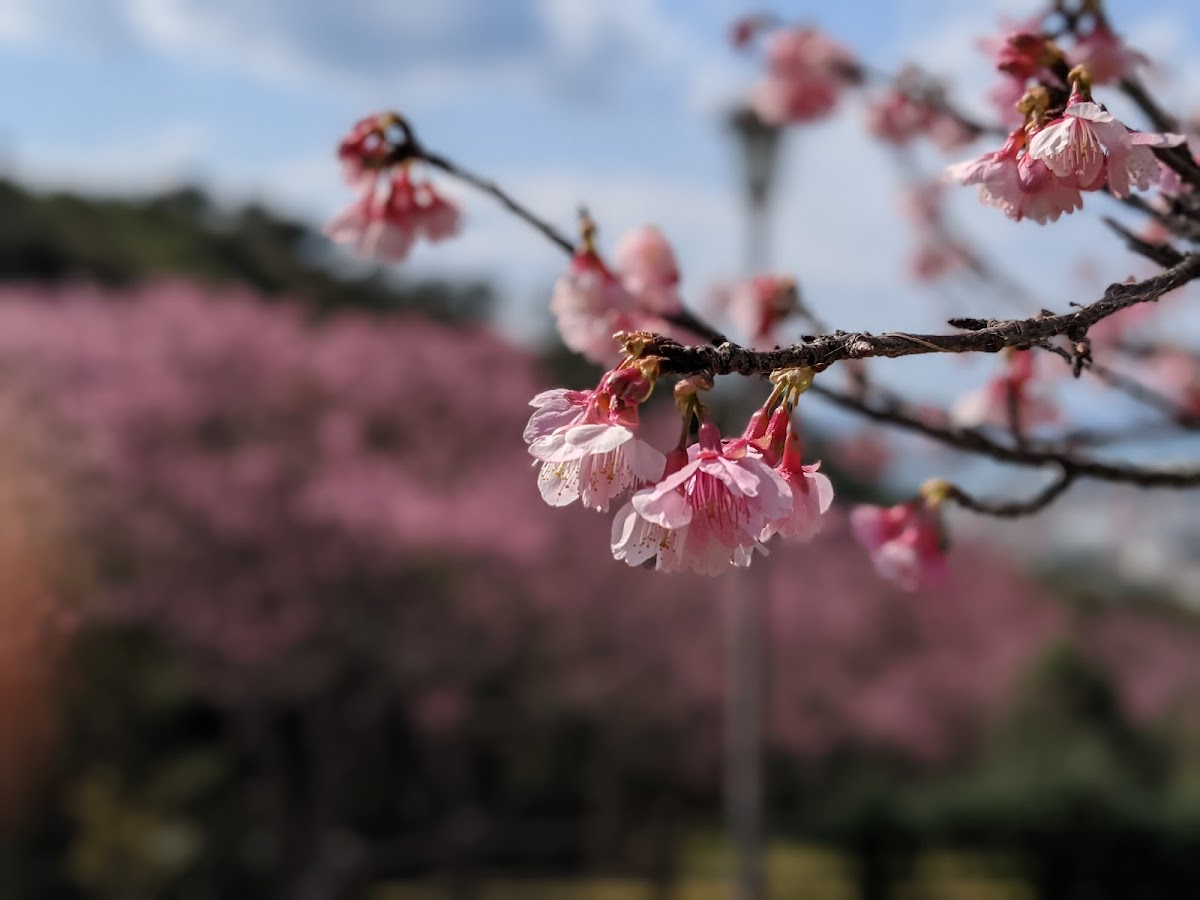
- Color: Deep pink to crimson, vibrant in hue
- Shape: Bell-shaped flowers that bloom downward
- Blooming period: Late January to late February (about 2 months earlier than mainland Japan)
- Petal fall: Flowers fall whole rather than petals scattering
- Origin: Southern China through Taiwan region
This variety suits Okinawa’s climate well, preferring warm weather, making it visible on the mainland only in warm regions like Kagoshima and Shizuoka prefectures. Kanhi Zakura is designated as Okinawa Prefecture’s official flower and is cherished as the herald of spring in Okinawa.
Unlike mainland cherry blossoms with their pale pink color, Kanhi Zakura is characterized by its vivid deep pink, creating beautiful contrast with blue skies and green leaves. This photogenic quality is also a reason for its popularity.
Peak Viewing Season for Yogi Park’s Cherry Blossoms and How to Check Bloom Status
Typical Bloom Schedule
Yogi Park’s Kanhi Zakura follows this typical schedule:
- Bloom begins: Late January to early February
- Peak bloom (full bloom): Mid to late February
- Bloom ends: Early March
Okinawa’s cherry blossoms characteristically bloom from north to south, opposite to the mainland. Blooming begins in Motobu Town and Nago City in northern Okinawa Main Island, then the cherry blossom front moves southward to Naha City.
How to Check Bloom Status
You can confirm the bloom status of Yogi Park’s cherry blossoms through:
- Naha City Official Website: Bloom information may be posted
- SNS (Twitter, Instagram): Check latest photos and information using hashtags like #YogiPark or #NahaSakuraFestival
- Okinawa Tourism Information Sites: Pages compiling prefectural cherry blossom information
- On-site inquiries: Call Naha City Park Management Division or nearby facilities
Since bloom timing varies with climate conditions, it’s recommended to check the latest information before visiting.
Naha Sakura Festival Highlights and Event Information
Every February, “Naha Sakura Festival” is held at Yogi Park, featuring numerous events timed with the cherry blossom season.
Naha Sakura Festival Overview
- Held: Typically mid to late February weekend (approximately 2 days)
- Location: Special venue within Yogi Park
- Admission: Free
- Attendance: Tens of thousands of visitors annually
Main Festival Highlights
1. Stage Events
Local performance groups present Okinawan folk songs, Eisa dance, and Ryukyuan traditional dances. Children also perform songs and dances, creating a friendly, community-oriented atmosphere. Folk song competitions allow visitors to enjoy traditional Okinawan music live.
2. Flower and Tree Market
A “flower and tree market” features sales of Kanhi Zakura saplings and other Okinawan plants and flowers by gardening professionals. You can receive expert advice while purchasing, making it popular for those wanting to grow Okinawa’s cherry blossoms at home. A wide variety of foliage plants and seasonal flowers are available.
3. Food Stalls
Numerous food vendors offer Okinawa soba, sata andagi (fried dough), tacos rice, Orion beer, and other local cuisine. Enjoying Okinawan flavors while viewing cherry blossoms is a key highlight of the festival.
4. Children’s Events
Play corners, game booths, and craft experiences offer plenty of fun for children. The event is designed for families to enjoy all day.
Checking Event Dates
The exact dates for Naha Sakura Festival are determined by cherry blossom bloom status and vary yearly. Official announcements typically appear on Naha City’s website or tourism information sites 1-2 weeks before the event, so check ahead if planning a visit.
Five Captivating Cherry Blossom Viewing Spots at Yogi Park
Viewing Spot ① Cherry Blossom-Lined Promenade Along Gabu River
Yogi Park’s greatest highlight is the approximately 400 cherry trees lining both banks of the Gabu River. When the Kanhi Zakura blooms in full, the pink flowers reflected on the river’s surface create a dreamlike landscape.
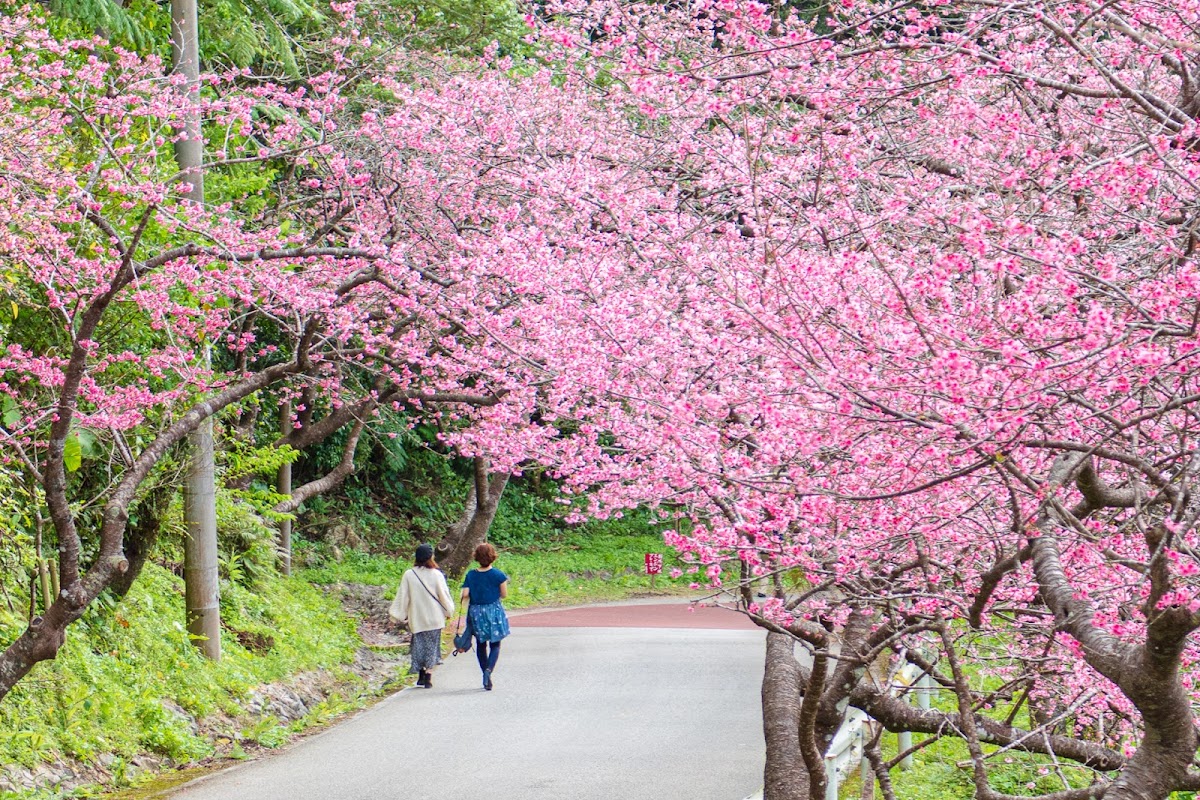
With a developed walking path, you can leisurely stroll while enjoying the blossoms. Walking along the river creates the sensation of experiencing a cherry blossom tunnel overhead, as if showered by blossoms.
The reflection of cherry blossoms on the water’s surface is popular with photographers, attracting many photography enthusiasts. On clear days especially, the contrast between blue sky, vibrant pink cherry blossoms, and green leaves is beautiful and ideal for photography.
Viewing Spot ② Okinawa-Unique Collaboration of Palm Trees and Cherry Blossoms
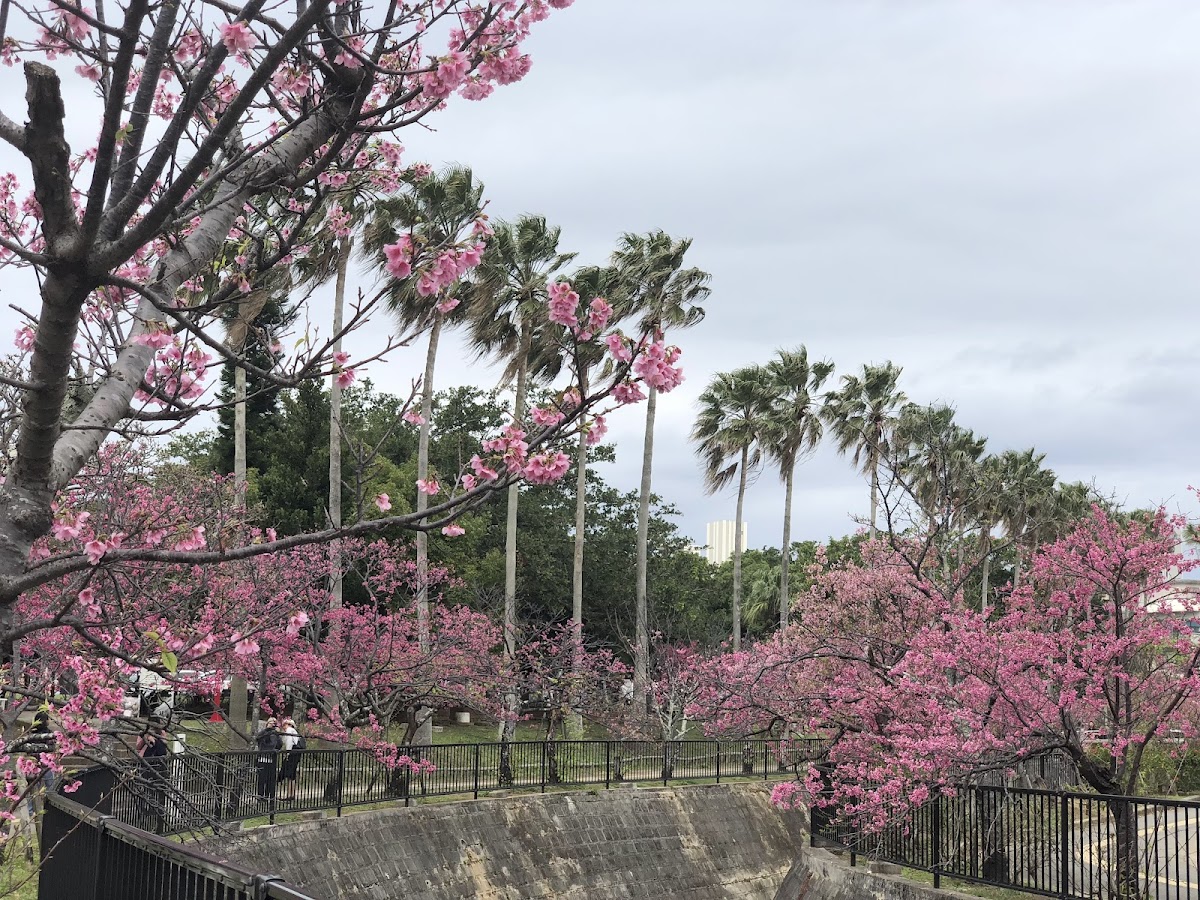
Yogi Park offers a uniquely Okinawan landscape impossible to see elsewhere—palm trees and cherry blossoms blooming simultaneously.
This distinctive view of tropical symbol palm trees combined with traditional Japanese cherry blossoms is exclusive to Yogi Park, captivating visitors. The tall palm trunks and pink Kanhi Zakura beneath create a landscape unmatched by other cherry blossom sites, offering a special experience.
Giant Gadjumalu trees are scattered throughout, and the collaboration between subtropical plants and cherry blossoms is a unique experience found nowhere else.
Viewing Spot ③ Picnicking on the Lawn Plaza
The park features spacious lawn areas where families and groups spread out leisure sheets for picnics. Spending time leisurely while viewing cherry blossoms is a luxurious escape from urban bustle.
Cherry blossoms are planted around the lawn plaza, allowing 360-degree cherry blossom viewing. Ample space allows children to play, with ball games and badminton commonly seen.
Viewing Spot ④ Night Cherry Blossom Illumination (Limited Period)
During the Naha Sakura Festival, nighttime illumination may be provided. Illuminated Kanhi Zakura create a completely different, dreamlike atmosphere from daytime viewing, allowing romantic nighttime cherry blossom appreciation.
The flickering light of cherry blossoms reflected on the river presents an entirely different character. Illumination availability and times vary yearly, so advance confirmation is recommended.
Viewing Spot ⑤ “Urban Cherry Blossom Viewing” with Excellent Accessibility
A major advantage of Yogi Park is its convenient central location in Naha. Just a 15-minute walk from Kokusai Street and 15-minute drive from Naha Airport, cherry blossom viewing is easily accessible.
You can visit between tourist activities without major detours or extensive planning. “Urban cherry blossom viewing” in a nature-rich environment despite being in the city center is extremely convenient for time-limited tourists.
Multiple parking areas surround the park (paid), and public transportation access is excellent, accommodating any travel style.
Tips for Cherry Blossom Photography at Yogi Park and Recommended Shots
Best Photography Timing
- Time of day: Early morning soft light is optimal. Afternoon may create backlighting in some areas
- Weather: Clear skies create beautiful sky contrast. Cloudy days allow soft-toned photos
- Crowds: Weekday mornings are relatively quiet. Weekends and festival days are crowded
Recommended Photography Spots
- Bridge over Gabu River: Classic vantage point overlooking riverside cherry trees
- Water reflections: Beautiful Kanhi Zakura reflections on the water’s surface
- Palm trees and cherry blossoms: Captures Okinawan character
- Cherry blossom tunnel: Upward angle along the walking path
- From the lawn plaza: Wide-angle capture of blossoms and visitors
Photography Tips
- Since Kanhi Zakura blooms downward, low-angle upward shots are recommended
- Slightly underexpose to maintain vibrant deep pink coloring
- Include blue sky or green leaves as background for beautiful contrast
- When including people, have them pose under blossoms for atmosphere
How to Access Yogi Park and Parking Information
Basic Information
- Address: 1-chome Yogi, Naha City, Okinawa Prefecture
- Open hours: 24 hours (Note: limited lighting at night)
- Admission: Free
- Inquiries: Naha City Park Management Division
Access by Car
- From Naha Airport: Approximately 15 minutes (about 5 km)
- From Kokusai Street: Approximately 5 minutes (about 2 km)
- From Naha IC on Okinawa Expressway: Approximately 10 minutes
Set your car navigation to “Naha Citizens’ Hall” or “Okinawa Prefectural Library” for convenience.
Parking Information
While Yogi Park has no dedicated free parking, these facilities are nearby:
- Naha Citizens’ Hall Parking: Paid, closest to park
- Okinawa Prefectural Library Parking: Paid, library users prioritized
- Nearby coin parking: Available at multiple locations, approximately 200-300 yen per hour
During Naha Sakura Festival, expect congestion; early arrival is recommended. If full, consider parking farther away and walking.
Access by Public Transportation
Bus
Multiple bus routes are available from Naha Bus Terminal and Kokusai Street.
- Nearest stops: “Yogi,” “Kairan,” “Naha Citizens’ Hall Mae,” etc.
- Travel time: Approximately 10 minutes from Kokusai Street
- Fare: Approximately 230 yen (varies by section)
Many routes available: Lines 1, 3, 5, 9, 12, 14, and more
Monorail (Yui Rail)
- Nearest stations: “Asato Station” or “Makishi Station”
- Walk to park: Approximately 15-20 minutes
Combining monorail and bus is also an option. Transferring to bus from Asato Station brings you closer to the park.
On Foot
- From Kokusai Street: Approximately 15-20 minutes walk
- From Prefectural Government Building Station: Approximately 20 minutes
Walking is an enjoyable distance combining sightseeing. Shopping streets and cafes line the route, allowing you to enjoy Okinawan streetscapes.
Recommended Nearby Spots to Visit with Yogi Park
1. Kokusai Street (15-minute walk)
Naha’s main street features approximately 1.6 km of souvenir shops, restaurants, and fashion boutiques. Perfect to visit before or after viewing cherry blossoms at Yogi Park.
Popular with tourists for enjoying Okinawan cuisine and purchasing souvenirs while experiencing Okinawan culture.
2. Tsuboya Yachimun Street (5 minutes by car)
Workshops and galleries for “yachimun,” Okinawa’s traditional pottery, line this street. Ideal for seeking Okinawan ceramics, enjoyable even for simple strolling.
Historic cobblestone paths and preserved traditional houses create picturesque scenery, recommended for photography.
3. Shuri Castle Park (10 minutes by car)
A UNESCO World Heritage site symbolizing the Ryukyu Kingdom. Though the main hall burned in 2019, you can view reconstruction work and visit surrounding castle walls, gates, and gardens.
This precious site for learning Okinawan history and culture is frequently visited alongside Yogi Park.
4. Okinawa Prefectural Museum and Art Museum (10 minutes by car)
A comprehensive facility covering Okinawa’s nature, history, culture, and art. Permanent exhibits present Okinawan history from the Ryukyu Kingdom era to present day.
Recommended for rainy-day sightseeing, with café and museum shop facilities.
5. Sakae-machi Market (10-minute walk)
A traditional market used by locals with fresh seafood, vegetables, and fruit. Evening bar establishments open, offering local Okinawan cuisine and alcohol in authentic atmosphere.
Growing in popularity as a place to experience real, non-touristy Okinawa.
6. Shikina-en (15 minutes by car)
The largest retreat of Ryukyu royal families, a UNESCO World Heritage site with beautiful gardens. Features unique design combining Chinese and Japanese landscaping techniques with a strolling-style garden centered on a pond.
A serene atmosphere for experiencing Ryukyu cultural aesthetics.
Recommended Dining Around Yogi Park
Okinawa Soba Specialty Shops
Several local favorites serving Okinawa soba surround Yogi Park. After viewing cherry blossoms, enjoying authentic Okinawa soba is recommended.
Typical menus include soki soba, pork belly soba, and feet soba. Featured are light bonito and pork bone-based broths paired with chewy noodles.
Cafés and Sweet Shops
Stylish cafés and sweet shops increasingly operate nearby, offering sweets using Okinawan ingredients and sugar cane juice and Okinawan shaved ice with azuki beans.
Ideal for resting after enjoying the blossoms.
Izakayas and Okinawan Cuisine Restaurants
Evenings see busy izakayas serving Okinawan cuisine and awamori spirits. Dishes like goya champuru, rafute, sea grapes, and pickled ginger showcase Okinawan specialties.
Enjoying Okinawan evenings while socializing with locals is also recommended.
Practical Advice for Enjoying Cherry Blossoms at Yogi Park
Packing Checklist
- Leisure sheet: For picnicking on grass
- Sunscreen/hat: Okinawa’s February sun is strong
- Beverages: Vending machines available, but bringing your own is convenient
- Camera/smartphone: Don’t forget charging
- Light snacks: No food stalls outside festival periods
- Insect repellent: Mosquitoes may appear in evenings
- Light jacket: Mornings and evenings can be cool
Clothing Tips
February in Okinawa averages 17-20 degrees Celsius. Daytime is warm, but mornings and evenings can chill, making layered, removable clothing recommended.
- Daytime: Single long-sleeved shirt or light jacket
- Morning/evening: Cardigan or hoodie
- Shoes: Comfortable sneakers or flat shoes
Etiquette and Notes
- Take all trash with you: Park trash bins are limited
- Don’t break cherry branches: Handle flowers and branches carefully
- Respect other visitors: Avoid loud voices and noise
- Pets on leash: If bringing pets, keep on leash and clean up
- Smoking: Designated areas only
- Nighttime safety: Limited lighting; a flashlight is helpful
Best Visiting Times
- Weekday mornings: Less crowded, leisurely enjoyment
- Early weekend mornings: Few people, ideal for photography
- Evening: Beautiful sunset and cherry blossom combination
- Festival days: Attend for events, afternoon timing recommended
Other Cherry Blossom Sites Throughout Okinawa Prefecture
Beyond Yogi Park, numerous captivating cherry blossom sites exist in Okinawa Prefecture. With sufficient time, visiting multiple spots is recommended.
Nago Castle Park (Nago City)
One of Okinawa’s most famous cherry blossom spots with approximately 20,000 Kanhi Zakura trees. The annual “Nago Sakura Festival” attracts visitors from across and outside the prefecture.
Yaeseemun Park (Yaese Town)
About 500 cherry trees are planted with the “Yaese Sakura Festival” held annually. Located on elevated terrain, it offers the unique view of cherry blossoms and sea together.
Nakijin Castle Ruins (Nakijin Village)
Approximately 300 cherry trees bloom at this UNESCO World Heritage site, creating a spectacular collaboration of historic structures and cherry blossoms. The “Nakijin Gusuku Sakura Festival” includes nighttime illumination.
Motobu Yae-take Sakura Forest Park (Motobu Town)
Among Okinawa Main Island’s earliest blooming areas with approximately 7,000 cherry trees coloring the mountain. The “cherry blossom tree-lined drive” is popular for viewing blossoms while driving.
Yogi Park’s History and Local Role
Yogi Park has long been cherished as a gathering place for Naha residents. Developed through post-war urban planning, it evolved as a green urban park.
The Gabu River flowing through the park was historically a crucial water source closely tied to residents’ lives. Now developed as a water-accessible space, the riverside cherry tree-lined promenade has become the park’s iconic landscape.
With adjacent cultural facilities—Naha City Library, Okinawa Prefectural Library, and Naha Citizens’ Hall—it serves cultural and educational purposes. Used for community events and gatherings, it remains essential to residents’ lives.
Kanhi Zakura planting stemmed from community efforts to create a cherry blossom site suited to Okinawa’s climate. Currently established as a premier cherry blossom destination representing Naha. The annual “Naha Sakura Festival” serves an important community interaction role.
Year-Round Enjoyment at Yogi Park
Beyond cherry blossom season, Yogi Park offers diverse year-round enjoyment.
Spring (March-May)
After cherry blossom season ends, new greenery becomes beautiful, ideal for strolling. In warm weather, picnickers and joggers fill the park.
Summer (June-August)
Gadjumalu and palm trees display deep green foliage, creating maximum tropical atmosphere. Visitors enjoy shade under trees.
Autumn (September-November)
Passing typhoon season brings comfortable weather. Various events and community activities may be held.
Winter (December-February)
Okinawa’s mild winters resemble mainland autumn. Cherry blossom blooming begins late January, again enlivening the park.
Conclusion: Experience Okinawa’s Unique Cherry Blossoms at Yogi Park
Yogi Park in Naha City, Okinawa Prefecture, is a premier cherry blossom viewing site featuring approximately 400 Kanhi Zakura trees in full bloom. With convenient accessibility just a short walk from Kokusai Street, it’s an invaluable spot for easily enjoying Okinawa’s distinctive cherry blossom experience.
Yogi Park’s unique charms include vivid pink Kanhi Zakura differing from mainland varieties, the spectacular collaboration of palm trees and cherry blossoms, and the beautiful cherry tree-lined promenade along Gabu River. The annual “Naha Sakura Festival” held in February allows experiencing cherry blossoms alongside local culture.
Peak viewing occurs mid to late February, though bloom status varies yearly—checking current information before visiting is recommended. Nearby attractions including Kokusai Street, Shuri Castle, and Tsuboya Yachimun Street enable efficient tourism combination.
At Yogi Park, lush with nature despite urban location, experience Okinawa’s distinctive cherry blossoms. Spring arrives approximately two months earlier than the mainland—experience the special moment of touching subtropical cherry blossom beauty.