Complete Guide to Cherry Blossoms at Nakijin Castle Ruins | Experiencing Japan’s Earliest Cherry Blossoms at a World Heritage Site
Located in Nakijin Village, Kunigami District, Okinawa Prefecture, Nakijin Castle Ruins is both a historically significant castle of the Ryukyu Kingdom registered as a World Heritage Site and a famous cherry blossom viewing spot known for having Japan’s earliest cherry blossom season. Every year from late January to early February, approximately 600 vibrant Kan’hi cherry blossoms (Cerasus campanulata) paint the stone-paved castle walls, captivating visitors along with enchanting nighttime illuminations.
This article comprehensively covers everything you need to know to maximize your cherry blossom viewing experience at Nakijin Castle Ruins, including viewing highlights, blooming periods, festival details, access methods, and tips for avoiding crowds.
Nakijin Castle Ruins | A Historical Castle of the Ryukyu Kingdom Registered as a World Heritage Site
History and Scale of Nakijin Castle Ruins
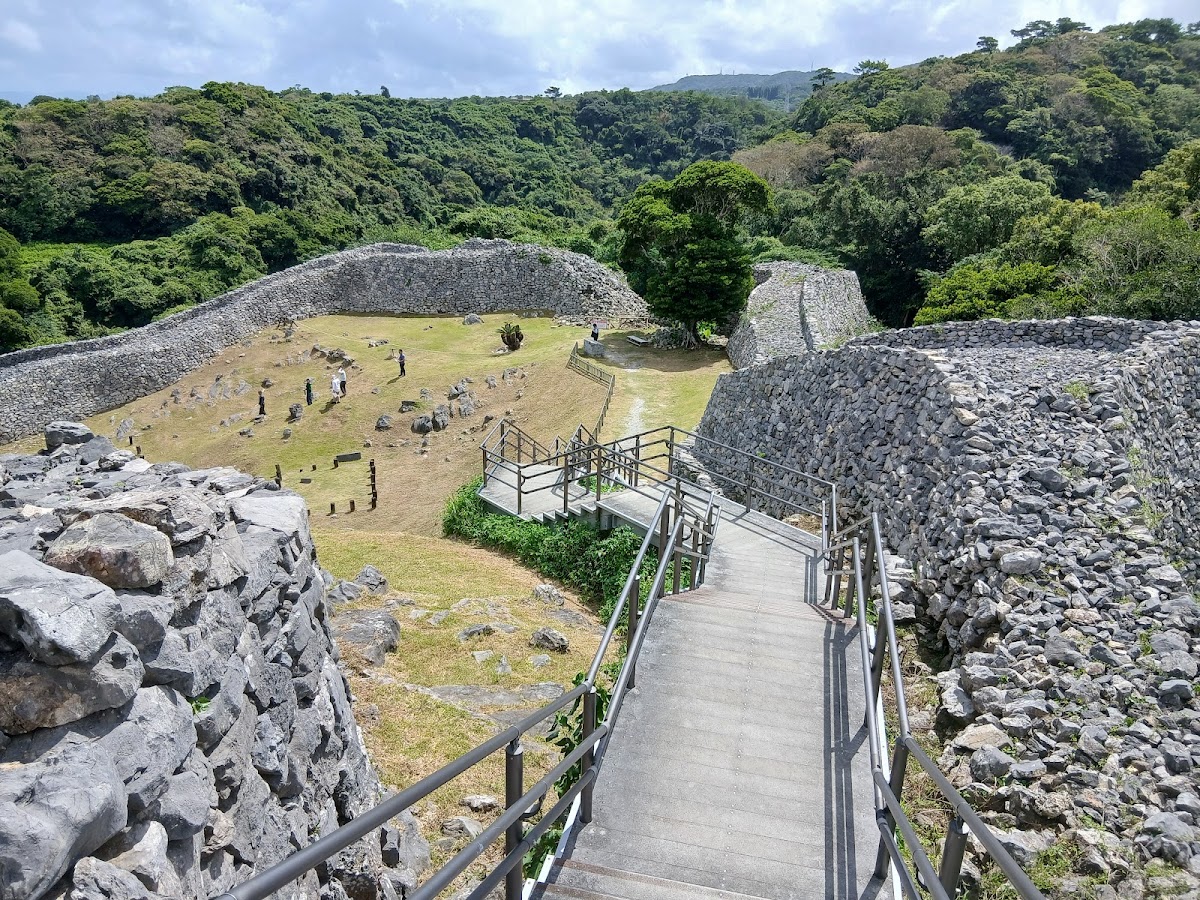
Nakijin Castle Ruins (Nakijin Jōato) is an important castle (Gusuku) from the Ryukyu Kingdom era, believed to have been built in the late 13th to early 14th century. It boasts the second-largest scale after Shuri Castle, with a total area of approximately 17,000 tsubo (about 56,000 square meters). Once the residence of the Hokuzan King who governed the northern part of Okinawa’s main island, it later served as an important base where a magistrate (kanshū) was stationed after the unification of the Ryukyu Kingdom.
In December 2000, it was registered as a World Heritage Site as part of the “Gusuku Sites and Related Properties of the Ryukyu Kingdom,” with its historical value internationally recognized. The castle walls are characterized by graceful curves that skillfully utilize the natural terrain, and the stone walls reaching approximately 8 meters in height preserve the advanced construction techniques of the era.
Highlights and Scenic Viewpoints of the Castle Ruins
Because Nakijin Castle Ruins is located on elevated ground, the castle interior offers spectacular views of the blue East China Sea, lush mountains, and on clear days, even the island of Iejima can be seen in the distance. The stone-paved approach continuing from Heirō Gate, the spacious plaza called Ōmiya (Uumiyā), and the graceful curves of the castle walls leading to the main citadel (Shukaku) are filled with historical charm.
The area called Unaibaaru (御内原) in particular offers magnificent vistas, and the contrast between the castle walls and the sea and sky visible beyond them captures visitors’ hearts. During cherry blossom season, you can enjoy the unique scenery created by the interplay between these historic stone walls and the vivid pink Kan’hi cherry blossoms.
Why Nakijin Castle Ruins is Popular as a Cherry Blossom Viewing Spot
Kan’hi Cherry Blossoms (Cerasus campanulata) That Bloom Earliest in Japan
The special reason Nakijin Castle Ruins is renowned as a cherry blossom viewing spot is quite simply that it is “the place where cherry blossoms bloom earliest in Japan.” Ryukyu Island Cherry (Kan’hi cherry blossoms), a different species from those found in Honshu, naturally grows in Okinawa Prefecture, and due to the warm climate, blooming begins from mid to late January.
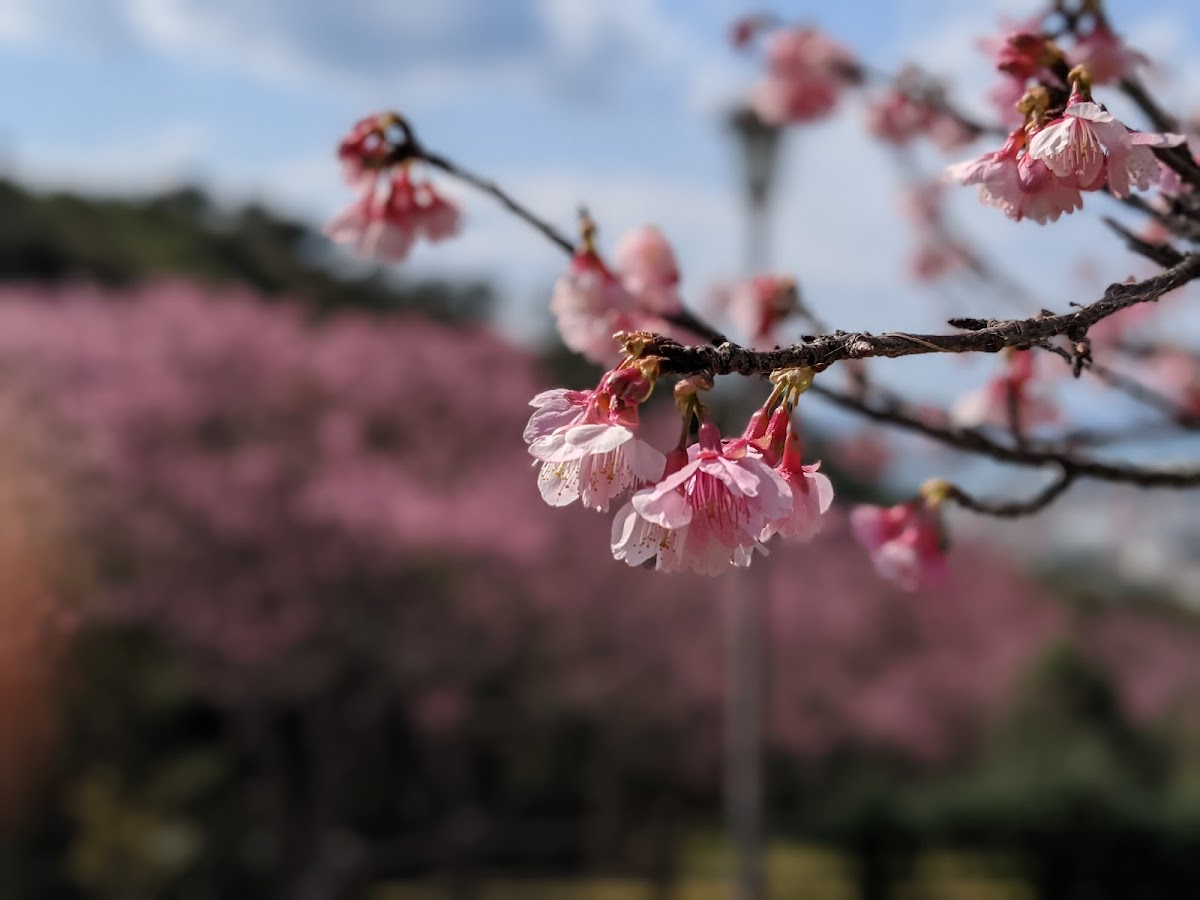
The Kan’hi cherry blossoms differ from the Somei Yoshino seen in Honshu, characterized by deep pink to crimson coloring. The petals bloom downward in a bell-shaped form. This deeply colored cherry blossoms create a striking contrast with the white Ryukyu limestone castle walls, blue sky, and sea—a unique beauty not found anywhere else.
The Spectacular Landscape Formed by Approximately 600 Cherry Trees
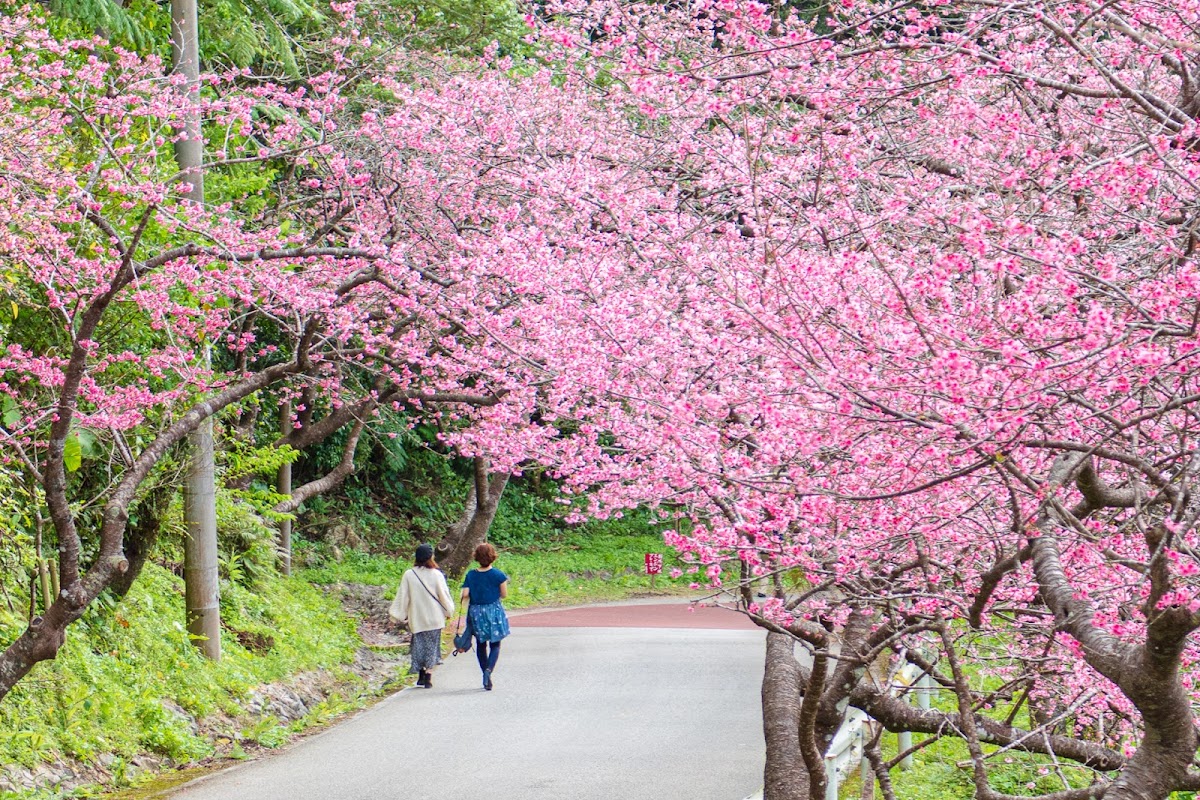
Approximately 600 Kan’hi cherry trees are planted throughout Nakijin Castle Ruins, allowing visitors to enjoy cherry blossoms in various locations within the castle grounds. Along the stone-paved approach leading to Heirō Gate in particular, a cherry blossom alley is formed, creating an enchanting atmosphere reminiscent of a cherry blossom tunnel.
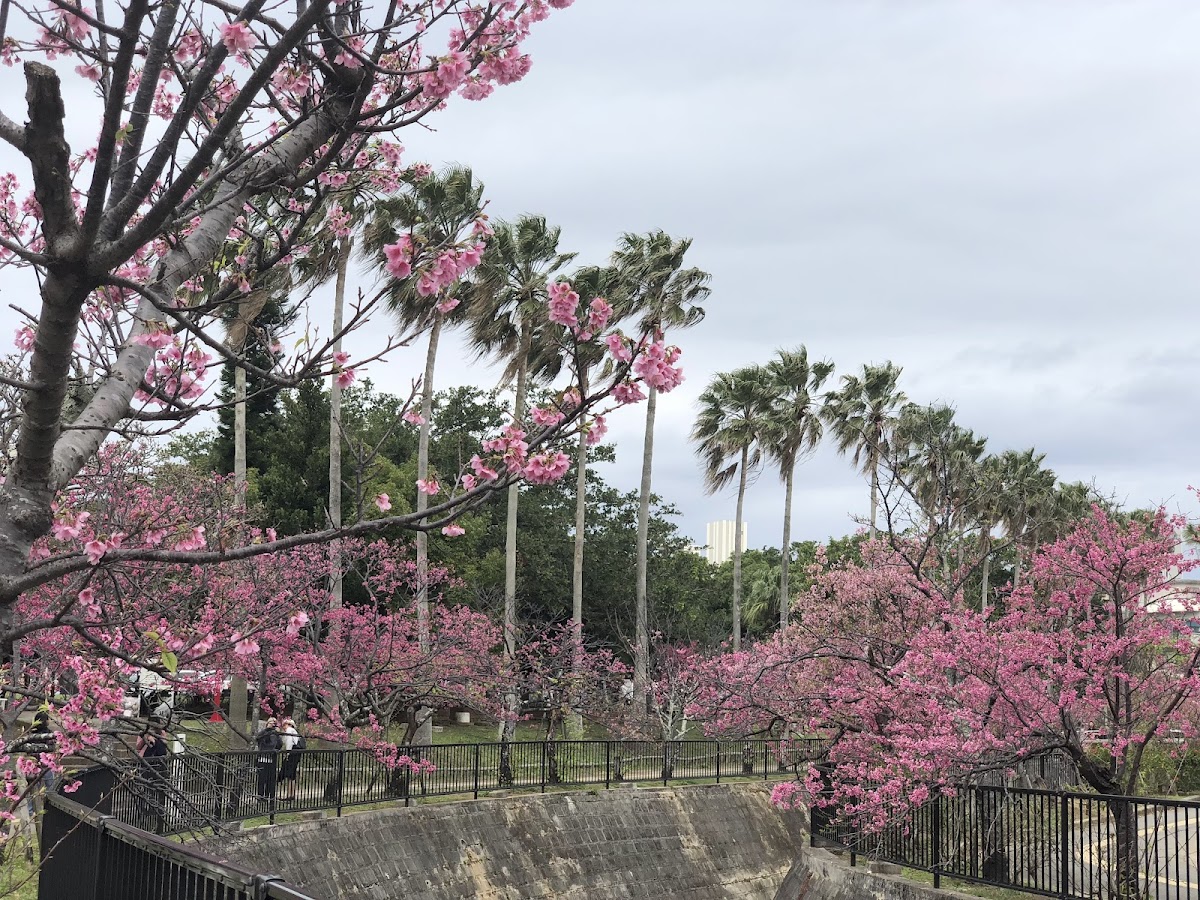
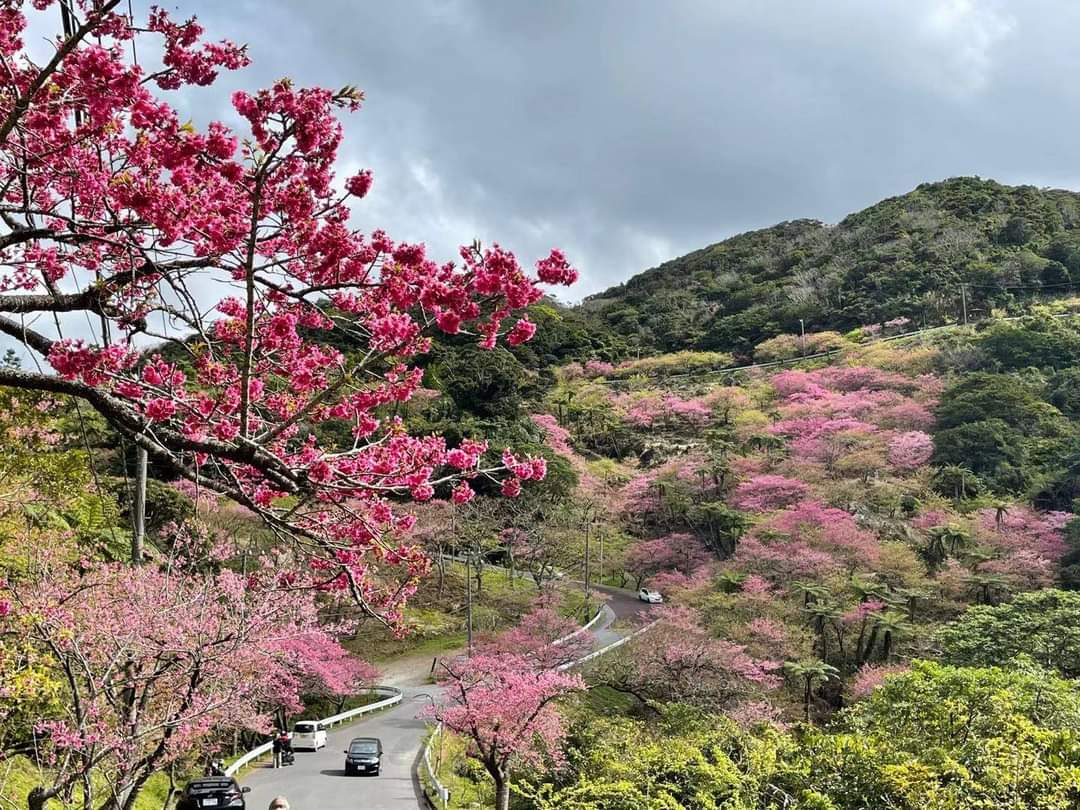
Cherry blossoms blooming along the castle walls, the shared performance of sea and blossoms visible on the return journey from the main citadel, and the sea of cherry blossoms as seen from the elevated lookout points all showcase different aspects of the blossoms unique to Nakijin Castle Ruins. This harmonious landscape of historical structures and nature has also made it a popular spot for photography enthusiasts.
Cherry Blossom Viewing Season and Bloom Status at Nakijin Castle Ruins
Blooming Period and Peak Bloom Time
The typical cherry blossom blooming season at Nakijin Castle Ruins begins from mid to late January. The blossoms reach full bloom around late January to early February, with slight variations from year to year, but generally late January to early February marks the most beautiful period.
Okinawa’s cherry blossom front characteristically moves southward from north to south, opposite to Honshu, and the northern part of Okinawa’s main island where Nakijin Village is located experiences particularly early blooming in the prefecture. The blooming period varies depending on temperature and climate conditions, so checking the latest bloom status before your visit is strongly recommended.
How to Check Bloom Status
The cherry blossom bloom status at Nakijin Castle Ruins is regularly updated on the Nakijin Castle Ruins official website. As the cherry blossom season approaches, detailed bloom information begins to be posted, so checking regularly when planning a visit is recommended.
Bloom information and event details are also posted on the official social media and website of the Nakijin Village Tourism Association. By confirming the latest local conditions in advance, you can enjoy the peak cherry blossoms without missing them.
The Appeal of the Nakijin Gusuku Cherry Blossom Festival
Festival Dates and Theme
The “Nakijin Gusuku Cherry Blossom Festival” is held annually from late January to early February. In 2026, the 19th festival is planned for January 31 (Saturday) through February 8 (Sunday), spanning nine days.
This year’s theme is “Ryukyu Kohkyō” (琉球光響). Cutting-edge digital technology will be used to recreate the history of Nakijin Castle in contemporary light. This fusion of tradition and innovation is drawing attention as a new form of cherry blossom festival.
Enchanting Nighttime Illumination and Gusuku Hanaakaari
The main highlight during the festival period is the nighttime illumination of the cherry blossoms and castle walls. After sunset, the castle walls are beautifully lit, and the deep pink Kan’hi cherry blossoms emerge against the dark night sky—a sight that can only be described as enchanting.
The “Gusuku Hanaakaari” display, which illuminates the approach to the castle grounds with candlelight, is particularly popular on social media. Countless candles line the stone pavement, their flickering light gently illuminating the cherry blossoms and castle walls, evoking deep emotion in visitors. Illumination is typically provided from around 18:00 to 21:00, though hours may vary by year and should be confirmed in advance.
Events During Festival Period
In addition to illuminations, various events are held throughout the festival. These include performances of traditional Ryukyu dance and folk music, food stalls selling local specialties and snacks, and historical guided tours, offering plenty to enjoy beyond cherry blossom viewing.
Special stage events are also sometimes organized during weekend festival periods, allowing visitors to experience local culture while enjoying the cherry blossoms. Detailed event schedules are announced on the Nakijin Village Tourism Association’s official website, which should be checked before your visit.
Ways to Enjoy Cherry Blossoms at Nakijin Castle Ruins | Photography Spots and Viewing Points
Stone-Paved Cherry Blossom Alley from Heirō Gate
The approach to Heirō Gate, the castle ruins’ entrance, is the first highlight of cherry blossom viewing. The cherry blossom alley along both sides of the stone pavement is like a cherry blossom tunnel, inviting visitors into a historical world.
Visiting early in the morning allows you to enjoy the cherry blossoms quietly with fewer people around. Additionally, photography utilizing backlighting and compositions combining stone pavement with cherry blossoms are ideal for capturing photogenic images. Heirō Gate itself, retaining characteristics of Ryukyu architecture, is also beautiful to photograph alongside the cherry blossoms.
Contrast Between Castle Walls and Cherry Blossoms
The greatest appeal of Nakijin Castle Ruins is the contrast between the white Ryukyu limestone castle walls and the deep pink Kan’hi cherry blossoms. In particular, cherry blossoms along the castle walls leading to the main citadel reveal a unique beauty enhanced by the graceful curves of the stone walls.
The view of cherry blossoms from atop the castle walls is also extraordinary. By viewing the blossoms from an elevated position, you can take in the vast sea of cherry blossoms at a glance. The combination of the blue East China Sea visible beyond the castle walls with the pink of the cherry blossoms creates a spectacular vista unique to Okinawa.
The Shared Performance of Sea and Cherry Blossoms | Views on the Return Path
Often overlooked by many tourists is the scenery enjoyed on the return journey from the castle ruins. On the way back from the main citadel to Heirō Gate, turning around offers a view of the castle walls and cherry blossoms with the blue sea stretching beyond—a complete vista.
This “shared performance of sea and cherry blossoms” is a spectacular view unique to Nakijin Castle Ruins, a sight impossible to see anywhere in Honshu. Particularly on clear afternoons when sunlight reflects off the sea surface, this is the optimal time for taking the most beautiful photographs. Don’t overlook the return path—be sure to turn around and enjoy the scenery.
Night Cherry Blossoms and Illumination Photography Techniques
The nighttime illumination during the festival period offers an entirely different, enchanting atmosphere from daytime viewing. When photographing, using a tripod and adjusting shutter speed allows for clearer capture of candlelight and cherry blossom beauty.
When photographing cherry blossoms against illuminated castle walls, adjust exposure carefully to prevent the blossom colors from becoming overexposed. Near closing time when fewer people are present is an excellent opportunity for focused photography. However, nighttime brings darker foot areas, so be sure to bring a flashlight and prioritize safety.
Visitor Information for Nakijin Castle Ruins | Hours, Admission, and Access
Operating Hours and Admission Fees
Normal operating hours at Nakijin Castle Ruins are 8:00 AM to 5:30 PM (last entry). During the cherry blossom festival period, hours are extended for nighttime illumination, typically allowing entry until around 9:00 PM (subject to yearly changes).
Admission is 600 yen for adults (high school students and above), 450 yen for elementary and middle school students, and free for children under elementary school age. Group discounts (20 or more people) are available at 480 yen for adults and 360 yen for students. Combination tickets with the Nakijin Village Historical and Cultural Center are also available, offering savings when purchased as a package.
Those with disability certificates receive 50% discount for the certificate holder and one caregiver. Tickets can be purchased at on-site ticket booths or at select advance purchase locations.
Access | Car, Bus, Taxi
By Car
From Naha Airport to Nakijin Castle Ruins takes approximately 1 hour 30 minutes using the Okinawa Expressway. Exit at Kyota IC, then head toward Nakijin Village via Routes 58 and 115. Enter “Nakijin Castle Ruins” or the address “5101 Imahei, Nakijin Village, Kunigami District, Okinawa Prefecture” into your car navigation system.
Parking is free but becomes heavily congested during cherry blossom season. Particularly on weekends and holidays during the festival period, parking may fill up by mid-morning. If possible, visiting on weekdays or arriving shortly after opening is recommended.
By Bus
Using public transportation, take a route bus (routes 65, 66, or express bus) from Naha Bus Terminal to Nago Bus Terminal, then transfer to a bus heading to Nakijin Castle Ruins. However, bus frequency is limited, so confirming schedules and allowing adequate time for planning is essential.
Additionally, direct buses and tour buses from Naha or Nago to Nakijin Castle Ruins may operate during tourist seasons. Using a bus tour eliminates driving concerns and allows for comfortable cherry blossom viewing.
By Taxi or Rental Car
From Nago City, taxi travel typically takes about 30 minutes with an estimated fare around 4,000 yen. For group visits, renting a car for flexible movement is most efficient. Since numerous attractions are scattered throughout northern Okinawa’s main island, a rental car allows you to enjoy surrounding sightseeing as well.
Parking Information and Crowd Avoidance Tips
Nakijin Castle Ruins has a free parking lot, though capacity is limited. Parking becomes heavily congested during cherry blossom season, particularly on weekends and holidays, with cars sometimes lining up before opening.
Most Congested Times
The most crowded periods are weekends and holidays from 10:00 AM to 3:00 PM. Late afternoon after illumination begins is also busy. To avoid crowds, the following times are recommended:
- Shortly after opening, 8:00 to 9:00 AM (enjoy cherry blossoms in quiet morning atmosphere)
- Weekday mornings (significantly less crowded than weekends)
- Late afternoon before illumination begins (experience both daytime and nighttime views)
Particularly for photography purposes, visiting at opening time is optimal, offering high chances of photographing cherry blossoms with minimal crowds.
Cherry Blossom Spots Near Nakijin Castle Ruins and Recommended Locations
Nago Central Park
Nago Central Park, located approximately 30 minutes by car from Nakijin Castle Ruins, is also one of Okinawa’s representative cherry blossom viewing spots. Positioned near Nagodate mountain’s summit, it features approximately 20,000 Kan’hi cherry trees. The “Nago Cherry Blossom Festival” is held there as well, offering a different scale of cherry blossom experience from Nakijin Castle Ruins.
Yaetake Sakura Forest Park
Yaetake in Motobu Town is also famous as a cherry blossom viewing spot. With approximately 7,000 Kan’hi cherry trees covering the 453-meter elevation, the sight of the mountainside dyed pink is breathtaking. The “Motobu Yaetake Cherry Blossom Festival” is held here, with the advantage of enjoying cherry blossoms while driving.
Nakijin Village Historical and Cultural Center
Located immediately near Nakijin Castle Ruins, the Nakijin Village Historical and Cultural Center offers detailed learning about Nakijin Castle’s history, excavated artifacts, and Ryukyu Kingdom-era culture. Visiting alongside cherry blossom viewing deepens understanding of the castle ruins, creating a more fulfilling tourism experience.
Churaumi Aquarium and Surrounding Attractions
Approximately 20 minutes by car from Nakijin Castle Ruins is “Okinawa Churaumi Aquarium,” a representative Okinawa tourist destination. Combining cherry blossom viewing with a visit here allows experiencing both Okinawa’s nature and history in a single day. The surrounding area also features attractions such as the Bise Fukugi Tree Alley and Kouri Island.
Practical Information for Cherry Blossom Viewing at Nakijin Castle Ruins
Clothing and Packing Advice
Late January to early February in Okinawa is warmer than Honshu, but mornings and evenings can be cool. Since Nakijin Castle Ruins sits on elevated ground with strong winds, the felt temperature drops. Long-sleeved shirts or cardigans are suitable for daytime, while lightweight jackets or windbreakers are reassuring for evening illumination viewing.
The castle grounds feature many stone steps and slopes, making comfortable sneakers advisable. Heels or sandals should be avoided. Additionally, sunny days warrant hats, sunscreen, and sunglasses.
Photography Preparation
A camera or smartphone is essential for capturing beautiful cherry blossoms. Prepare spare batteries and memory cards. For nighttime illumination photography, a tripod is convenient, though use may be restricted during crowded periods—check in advance.
Food and Rest Facilities
Vending machines are available within the castle grounds, but eating establishments or cafes are not. During the festival period, food stalls line the area, but lines can be long during crowded times. Preparing drinking water beforehand is wise.
Several local restaurants and cafes surround the castle ruins, serving Okinawa soba and local cuisine. The Nakijin Village agricultural produce direct sales shop offers fresh local vegetables, fruits, and specialty products.
Accessibility Information
As a historical structure, Nakijin Castle Ruins features many stairs and slopes, not offering complete barrier-free access. Wheelchair viewing is limited to certain areas, though the approach to Heirō Gate and parking areas are relatively flat.
Those with disabilities or elderly visitors should contact Nakijin Castle Ruins management beforehand regarding accessible viewing routes and assistance services.
Precautions and Etiquette for Visiting Nakijin Castle Ruins During Cherry Blossom Season
Protection of World Heritage Site and Consideration
Nakijin Castle Ruins is a precious cultural asset registered as a World Heritage Site. Damaging castle walls or stone pavement and entering restricted areas are strictly prohibited. Additionally, breaking cherry blossom branches or plucking flowers must be absolutely avoided.
Photography consideration is also necessary to avoid inconveniencing other tourists. During crowded periods, avoid occupying the same location for extended periods. Drone use is generally prohibited; permission must be obtained beforehand for aerial photography.
Garbage Disposal and Environmental Protection
Garbage cans may not be provided throughout the castle grounds. All trash must be carried away to maintain the beautiful environment. Particularly during the festival period when many visitors arrive, individual etiquette is crucial.
Additionally, the castle grounds are non-smoking. Smoking is permitted only in designated areas—follow the rules and enjoy responsibly.
Pets Accompaniment
Bringing pets to Nakijin Castle Ruins requires advance confirmation. Generally, small dogs on leashes may be admitted, though restrictions may apply during crowded periods or special events. Those planning to visit with pets should contact the management office beforehand.
History and Cultural Background of Cherry Blossoms at Nakijin Castle Ruins
Okinawa’s Cherry Blossom Culture and Characteristics of Kan’hi Cherry Blossoms
Okinawa’s cherry blossom culture has developed uniquely, differing from Honshu. Most cherry blossoms seen in Okinawa are Ryukyu Island Cherry (Kan’hi cherry blossoms), believed to originate in southern China through Taiwan.
Kan’hi cherry blossoms prefer warm climates and are well-adapted to Okinawa’s relatively mild winters. Unlike Honshu’s cherry blossoms, they bloom from January through February as temperatures drop. Additionally, whole blossoms fall rather than individual petals scattering—a different form of beauty from the Japanese cherry culture concept of “elegant departure.”
The Story of Nakijin Castle Ruins and Cherry Blossoms
Cherry trees at Nakijin Castle Ruins were planted relatively recently as part of tourism promotion initiatives. The combination of the World Heritage Site’s historical value with the natural beauty of Japan’s earliest blooming cherry blossoms transformed Nakijin Castle Ruins into Okinawa’s representative tourist destination.
For local residents, the cherry blossom festival represents an important celebration welcoming the new year, with both tourists and residents attending. The festival, where history, nature, and community unity converge, has become a valuable cultural asset for Nakijin Village.
Frequently Asked Questions (FAQ)
Q1: When is the best time to view cherry blossoms at Nakijin Castle Ruins?
A1: The typical peak viewing period is late January to early February. Particularly late January through early February marks full bloom and the most beautiful time. However, as climate conditions can shift these dates, checking the official website for the latest bloom status before visiting is recommended.
Q2: Are illuminations provided every day during the Nakijin Gusuku Cherry Blossom Festival?
A2: Yes, illuminations are provided daily throughout the festival period. Typically from around 6:00 PM to 9:00 PM, though hours may change yearly—confirm official information before visiting.
Q3: Is parking free? How crowded is it?
A3: Parking is free. However, particularly on weekends and holidays during the festival, congestion is severe, with capacity sometimes reached by mid-morning. Visiting on weekdays or arriving early at opening time is recommended for avoiding crowds.
Q4: What is the admission fee at Nakijin Castle Ruins? Are discounts available?
A4: Admission is 600 yen for adults (high school students and above), 450 yen for elementary and middle school students, and free for children under elementary school age. Group discounts (20+ people) are available at 480 yen for adults and 360 yen for students. Those with disability certificates receive 50% discount for the certificate holder and one caregiver.
Q5: Is the cherry blossom festival cancelled in rainy weather?
A5: Light rain typically does not result in cancellation. However, severe weather may result in cancellation of outdoor events and illuminations. When weather is uncertain, check the official website and social media for the latest information beforehand.
Q6: Are there accommodations near Nakijin Castle Ruins?
A6: Numerous hotels and traditional inns operate in Nakijin Village and neighboring Motobu and Nago cities. During the festival period, early reservations are essential as bookings fill quickly. Nearby resort hotels near the Churaumi Aquarium are also popular.
Q7: Is public transportation access convenient?
A7: Bus access is possible but limited in frequency, making it somewhat inconvenient. Travel by bus from Naha to Nago is necessary, then transfer to a bus for Nakijin Castle Ruins. Rental car, taxi, or tour bus use is more convenient.
Q8: Are there attractions besides cherry blossoms?
A8: Yes, Nakijin Castle Ruins as a World Heritage Site offers numerous historic points of interest including castle walls, stone pavement, and the Unaibaaru area. The elevated viewpoint’s East China Sea vista is also spectacular, with Iejima visible on clear days. Visiting alongside the adjacent Nakijin Village Historical and Cultural Center allows deeper historical learning.
Conclusion | Experience Special Cherry Blossoms at Nakijin Castle Ruins
Nakijin Castle Ruins is a special place where World Heritage historical value and Japan’s earliest blooming cherry blossoms converge—an experience impossible to have anywhere else. The spectacular scenery created by the contrast between white Ryukyu limestone castle walls and deep pink Kan’hi cherry blossoms, combined with the blue sea and sky, will etch itself deeply in visitors’ hearts.
During the Nakijin Gusuku Cherry Blossom Festival held annually from late January to early February, enjoy not only daytime cherry blossom viewing but also enchanting nighttime illuminations, Gusuku Hanaakaari candlelight displays, and local traditional performances. Experiencing the arrival of early spring while Honshu still experiences winter’s chill represents a luxurious experience unique to Okinawa.
When planning a visit, confirm bloom status in advance and plan to avoid crowds. Additionally, respect the World Heritage Site’s value and follow proper etiquette, ensuring this beautiful landscape is preserved for future generations.
The cherry blossoms at Nakijin Castle Ruins offer far more than a simple flower viewing spot—they provide a uniquely valuable experience where Ryukyu Kingdom history, Okinawan culture, and natural beauty harmonize. Please visit Nakijin Castle Ruins this winter in search of Japan’s earliest cherry blossoms and create special memories.